Elie Saab and H&M will bring a concentrated dose of after-dark glamour to selected stores and online on October 22. The collaboration stretches across womenswear, menswear, footwear, and accessories, translating a house known for ceremonial dressing into a faster, broader retail language.
That translation is the collection's real intrigue. Saab's vocabulary is built from drape, embellishment, elongated line, and the magnetic polish of an entrance. H&M works through a different calculus of price, volume, and production. The pleasure will lie in seeing which house codes remain vivid when couture technique gives way to industrial construction.
A Wardrobe Built for the Entrance
Fashionista's preview describes 54 pieces, including occasionwear for women and men, accessories, and footwear. Its reported United States prices extend from $39.99 for a choker to $429 for a leather jacket. Vogue's Paris showroom report counts 55 items and adds a more detailed picture: gradient sequins, lace embroidery, faux fur, sharp black tailoring, emerald chiffon, towering platforms, and a chocolate leather jacket fading into black. The one-piece difference remains in the published previews, while both establish the collection's scale and October 22 arrival.
TheIndustry.fashion confirms the launch through selected stores and online, describing embellished gowns, shimmering separates, tailoring, lace, gradient sequins, and accessories. Together, the previews reveal a collection that does not retreat into anonymous basics. It leans into the Saab universe, with surface, silhouette, and occasion at the centre.
The reported prices belong to the September preview and may vary by market and availability. The clothes themselves will have the final word on construction, fit, and finish once customers can handle and wear them.
Couture Codes Meet Industrial Scale
Elie Saab's public identity is inseparable from haute couture , red-carpet dressing, and an exacting command of embellishment. A collaboration at H&M scale cannot reproduce couture stitch for stitch, nor should that be the test. Its task is to make the house recognisable through design decisions that survive a different system.
Silhouette can travel. So can a sensibility for proportion, a midnight palette, the sweep of a cape back, the placement of shine, or the controlled drama of a gradient. Hand labour, internal corsetry, dense embroidery, finishing hours, and made-to-measure adjustment are less portable. The most persuasive pieces will be those that understand the difference and use industrial techniques with conviction rather than imitating couture superficially.
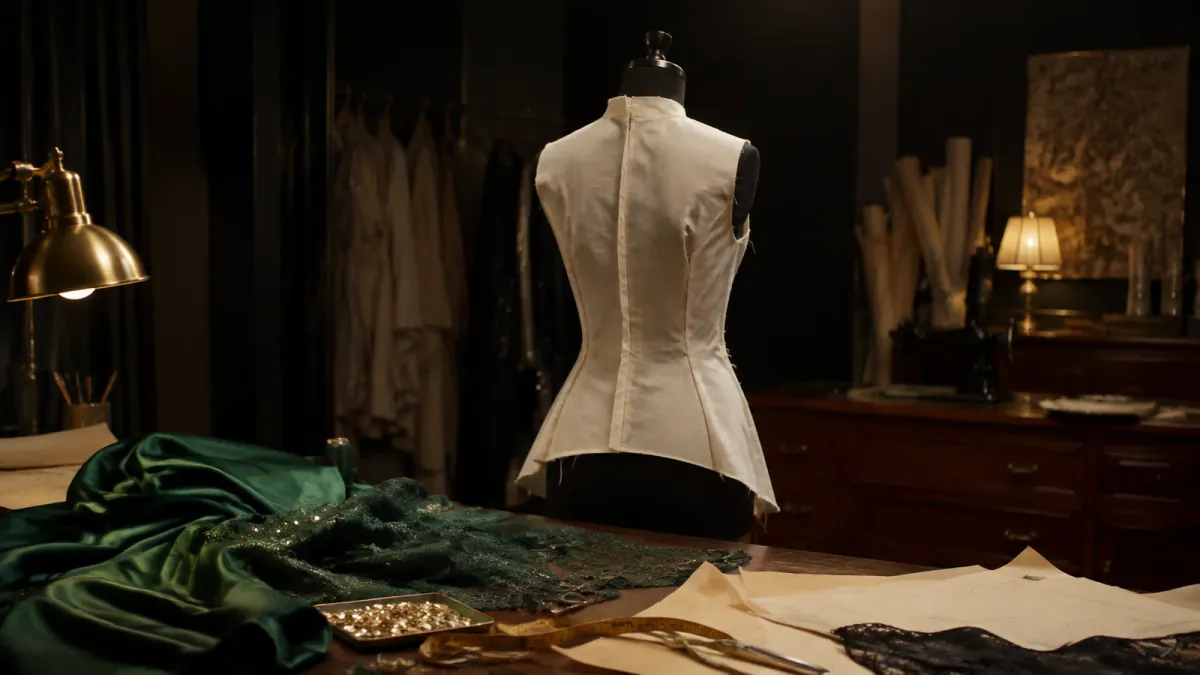
Vogue's account offers one particularly revealing detail. Saab draped a piece of black cloth into a bustier dress on a mannequin, leaving H&M's pattern-making team to work out how the bow, train, and smaller details should sit. That is the collaboration in miniature: gesture becoming pattern, then pattern becoming a garment for scale.
The collection also reaches beyond gowns. Coats, embellished knitwear, tailored evening jackets, scarves, flats, platforms, and daywear suggest a fuller lifestyle proposition. A sequined bodysuit with jeans or a cape-backed jacket worn outside formal dressing may prove more illuminating than a direct red-carpet echo. Translation feels most alive when a house code enters a new wardrobe rather than merely shrinking in price.
H&M's Collaboration Model Gets a New Kind of Glamour
H&M has been staging designer collaborations since Karl Lagerfeld's widely cited 2004 partnership. The format is familiar, but its best editions are never interchangeable. Each negotiates recognisability, scarcity, manufacturing reality, and the expectations attached to a famous name.
For Elie Saab , the project extends a visual language usually encountered through couture, bridal, ready-to-wear, and celebrity dressing. For H&M , it adds a house of unabashed occasion glamour to a programme often built around temporary proximity to luxury identity. Their interests meet in clothes that must announce Saab before the label is read.
The timing is smart. An October 22 launch places black tailoring, emerald chiffon, sequins, and elevated accessories directly into the holiday-dressing season. Yet the collection's longer appeal may depend on the pieces that escape a single party. A jacket with a decisive shoulder, a scarf with archival feeling, or a dark embellished knit can keep the collaboration in circulation after the first entrance.
The Clothes Will Set the Standard
The previews establish a clear proposition. This is a broad collection with womenswear and menswear, a complete accessory story, and an unapologetically polished point of view. They also show active involvement from Saab, Elie Saab Jr., and H&M's design leadership, rather than a name attached at the final stage.
Launch day will bring the tactile questions into focus. Lace should feel considered rather than merely decorative. Tailoring should hold its line. Embellishment should be attached with enough care to reward repeated wear. Sizes, prices, and availability should be communicated consistently across the selected-store and online model. Scarcity may create heat, but it cannot substitute for a beautifully resolved garment.
Claims about labour or environmental performance require collection-specific evidence, so the design can be admired without assigning it virtues the previews do not establish. The sharper judgment is material: how well do surface, fit, movement, and construction carry the promise already visible in the imagery?
Elie Saab and H&M have set the stage with a collection of roughly 55 pieces and a recognisable fashion proposition. The creative achievement will not be making couture cheap. It will be making glamour legible at a different scale, then letting the clothes retain their poise once the showroom lights give way to real wardrobes.