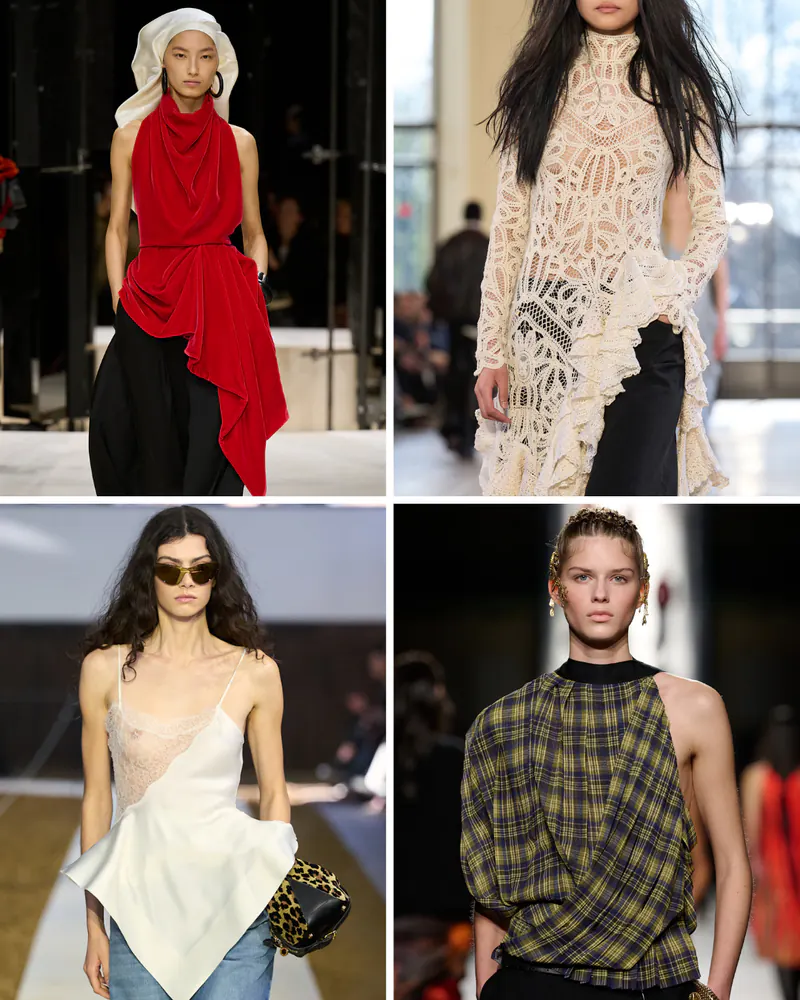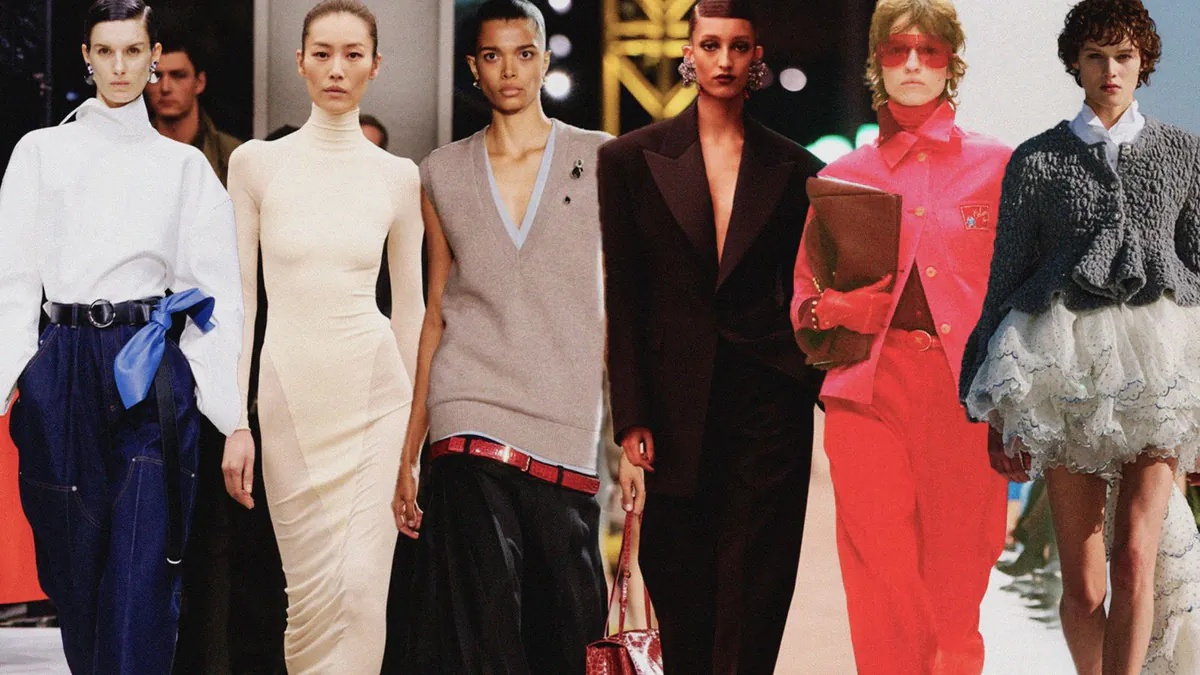
Statement collars, diaphanous layers, sculpted waists, and generous trousers gave fall 2026 its compelling tension between precision and ease. As New York Fashion Week , London Fashion Week , and Paris Fashion Week prepared to show spring/summer 2027, those contrasts offered a rich lens for what might come next. This outlook captures the view from September 7, before those three spring calendars began.
The Detail Carries the Look
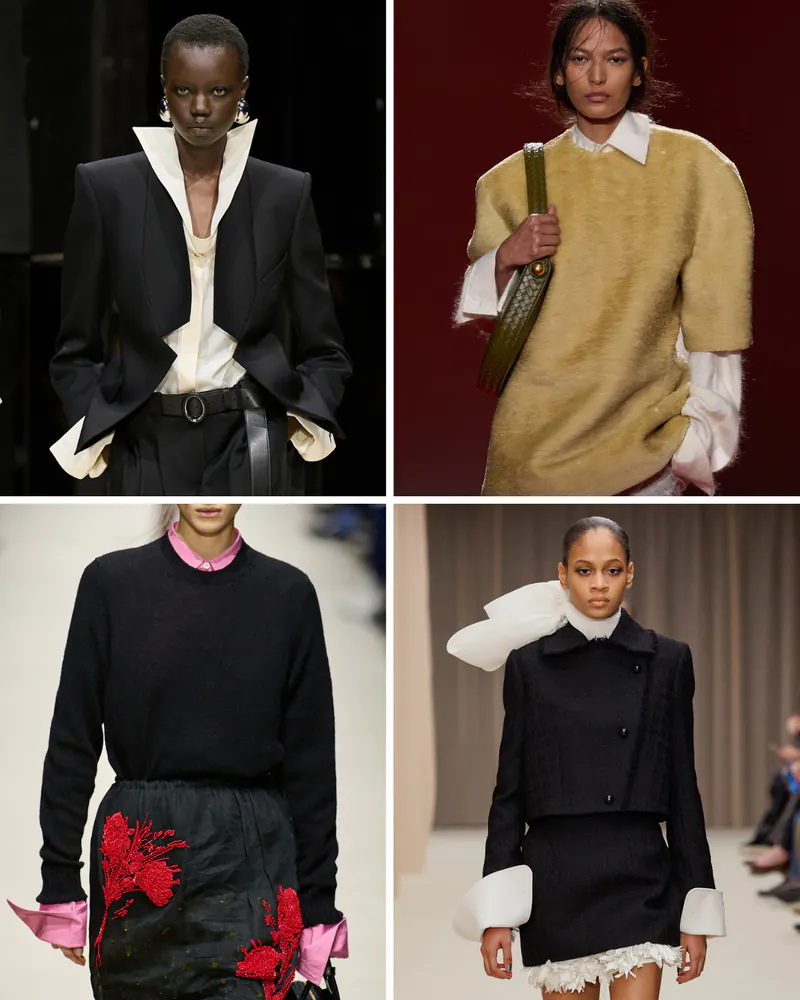
Fall 2026 made a persuasive case for clothes whose character sits in one exact decision. In her New York runway review for Fashionista , Dhani Mau traces boatnecks, tall collars, sculptural buttons, short capes, and brooches across the collections. Grey and black-and-white dressing provide a disciplined ground, while deep eggplant brings a saturated, almost lacquered richness.
The pleasure is in placement. A boatneck redraws the frame of a simple dress. A line of contrast buttons gives a plain coat rhythm. A brooch catches the eye at a lapel or throat. A capelet introduces movement above a narrow skirt. Familiar categories feel newly authored because a small element has been given real authority.
Spring could lighten the textiles without losing that precision. Necklines, cuffs, fastenings, and hems remain the places to watch. A sheer collar can carry the same intention as a winter funnel neck, while a fine tie, sharp cuff, or altered edge can give warm-weather clothes their own structure.
Who What Wear's September 7 report on diamond drop earrings supplies a graceful counterpoint. Eliza Huber observes quieter jewellery alongside more expressive clothes. The styling logic is elegant: let a pronounced collar take the lead and keep the earring restrained, or give a clean neckline one lucid point of light.
Softness Finds Its Architecture
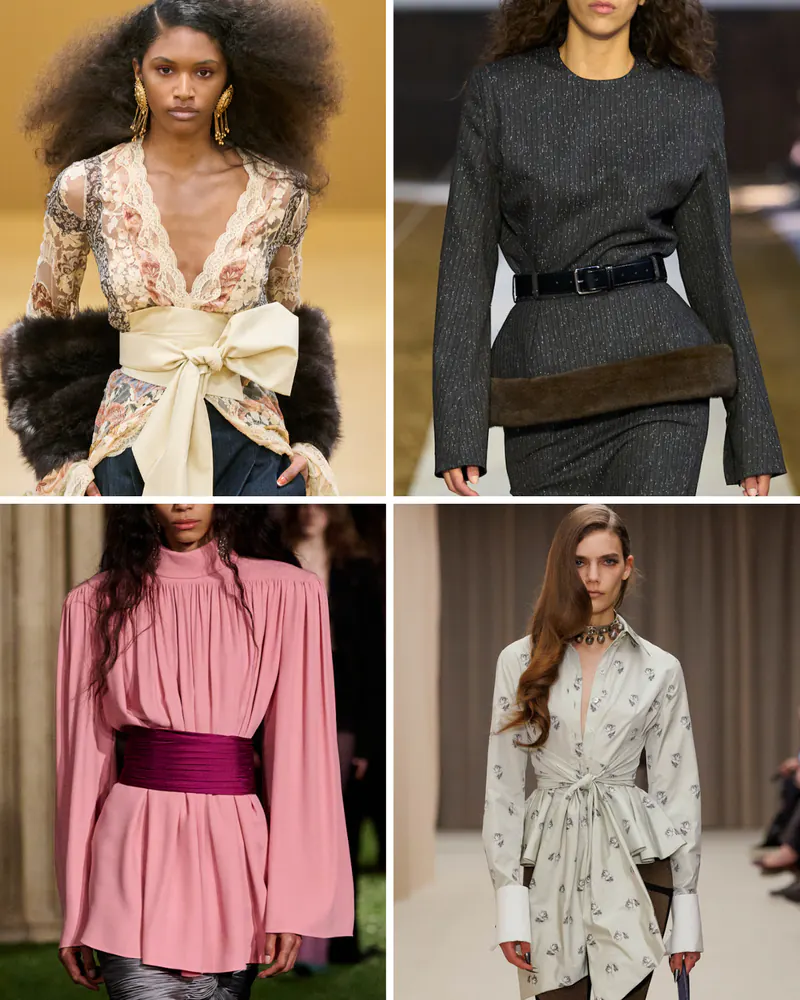
Who What Wear's report on autumn tops brings loose sheer layers, tied waists, asymmetric cuts, peplums, and conspicuous collars and cuffs into the same conversation. These details divide naturally into two moods. One is airy and translucent, with the underlayer becoming part of the composition. The other draws the body into focus through a tied waist, a peplum, or an off-centre line.
The strongest outfits let those impulses meet. A sheer blouse over an opaque camisole gains strength from a firm trouser. A fitted jacket becomes more modern above a full, relaxed leg. A romantic sleeve feels sharper against a compact torso. Balance, not accumulation, gives the clothes confidence.
That tension also leaves room for movement. Structure need not mean stiffness, and softness need not dissolve the silhouette. Spring 2027 looked poised to explore garments that hold their line while allowing the body to move freely within it.
Romance Returns With a Cleaner Hand
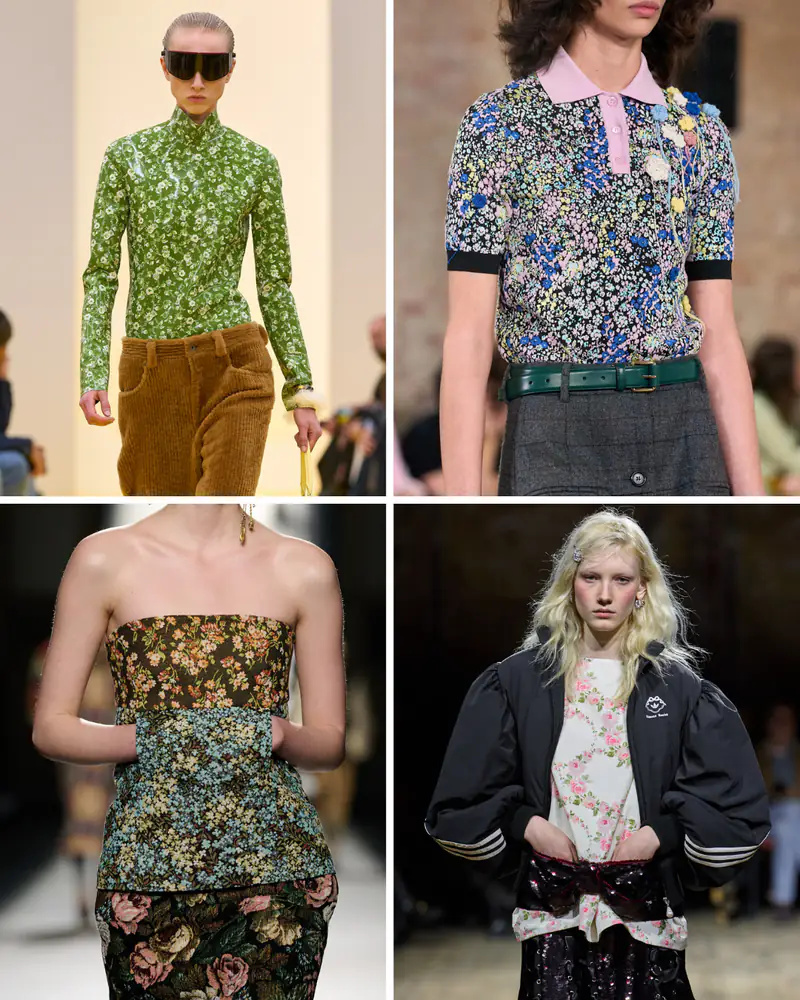
Vogue's fall 2026 runway synthesis gathers lace-trimmed cuffs, historically inflected shapes, dropped waists, and colour blocking alongside practical separates. The result is not costume, but romance edited with control.
A lace cuff emerging from a tailored sleeve can carry the entire historical note. A dropped waist lengthens the torso without requiring a complete period silhouette. A clean block of colour can bring drama to an otherwise spare cut. Fall's most useful lesson is that decoration feels strongest when it knows exactly where to stop.
Copenhagen Opens the Spring Conversation
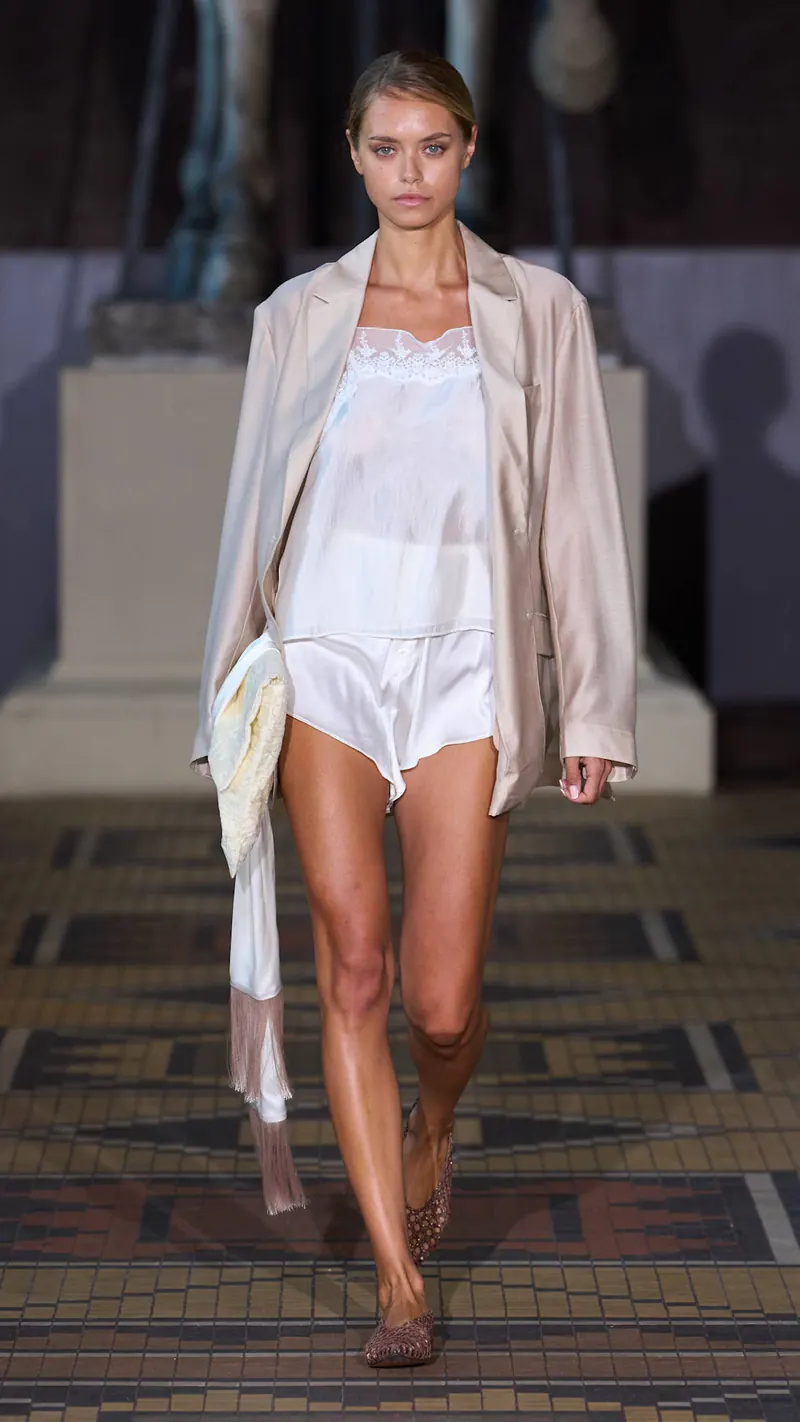
The first spring evidence had already arrived. Fashionista's Copenhagen spring 2027 trend report identifies pyjama dressing, light blue, mixed colour and pattern, balloon trousers, and uneven hems. The Garment's dressed-up sets and slips exemplify clothing that borrows the ease of sleepwear without surrendering polish.
Copenhagen suggested a spring wardrobe with air around the body: fluid sets, rounded trouser shapes, pale blue expanses, and pattern used with cheerful conviction. Its high-low hems and balloon legs also made proportion the story, turning movement into a visible design element.
That evidence set a lively benchmark for the larger cities. New York could refine the ease into lucid separates. London could push its theatrical potential. Paris could sharpen the proportions or let them lengthen and flow. Copenhagen did not dictate the season, but it opened the conversation beautifully.
New York: Polished Ease With Personality
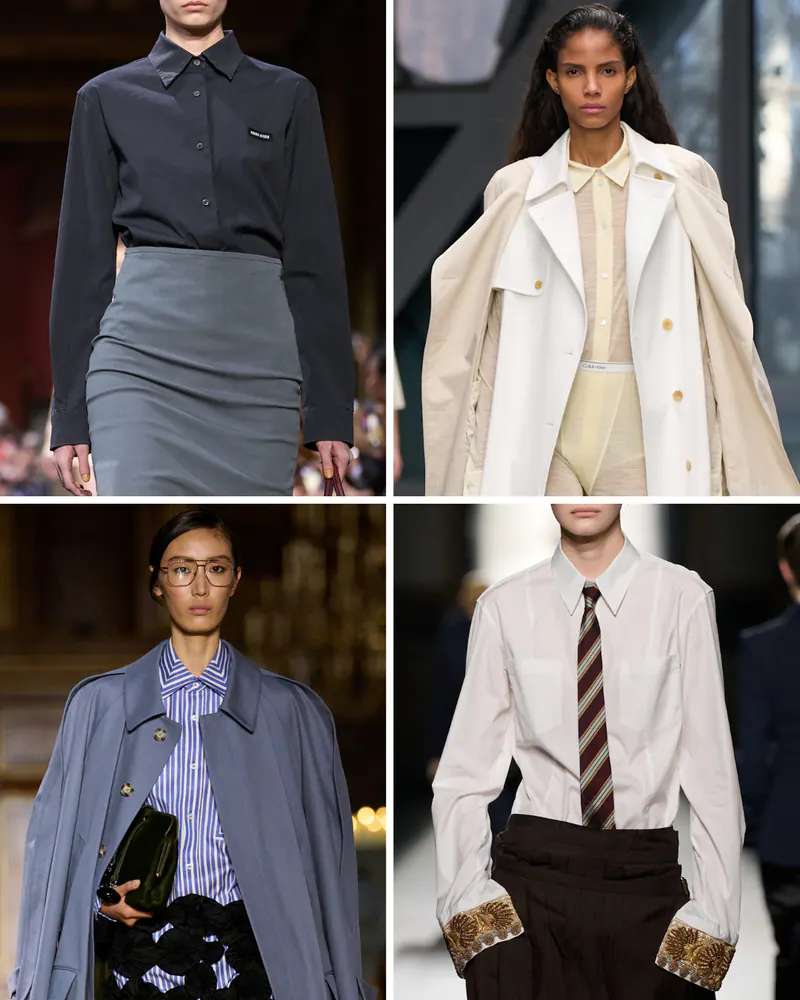
New York's most compelling question was how much personality everyday clothes could carry. After fall's fixation on collars, buttons, capes, and jewellery, the opportunity for spring lay in separates whose identity remains visible even when styling is simple.
The CFDA's preliminary schedule named Henry Zankov's debut for Diane von Furstenberg as the official opening and Thom Browne as the close. From that vantage point, a lighter version of polished ease felt plausible: fluid trousers beneath a defined jacket, dresses cut for movement, and knitwear carrying colour or texture. One sculptural accessory or sharply considered collar could make the whole proposition sing.
Readers drawn to the Calvin Klein styling pictured with the article can explore the brand's broader clothing range through Calvin Klein's Amazon Store I may earn a commission.
London: Romance With a Bolder Silhouette
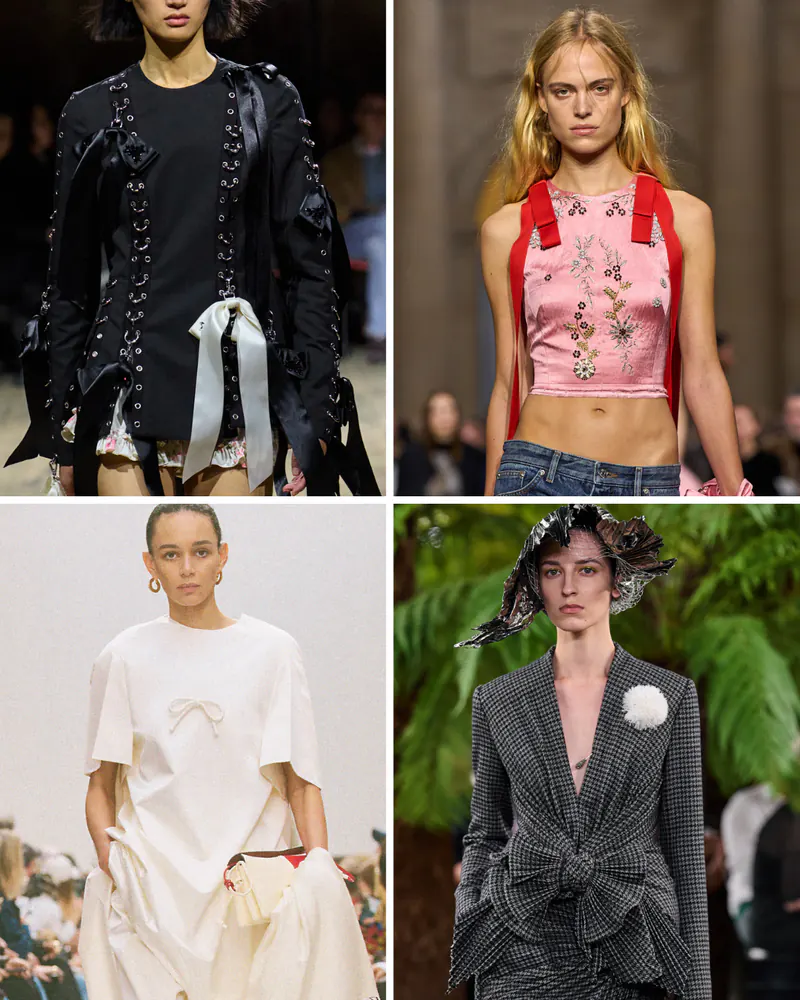
London promised the most expressive encounter between softness and control. The British Fashion Council's provisional announcement confirmed McQueen's return with Seán McGirr's London debut and Christopher Kane's first Mulberry collection, alongside Simone Rocha, Erdem, Roksanda, and Richard Quinn.
Against that lineup, lace, defined waists, and concentrated decoration offered fertile ground. Soft blouses could meet rigorous tailoring. Full skirts could find tension against compact tops. Ornament could gather at the neckline, cuff, or hip rather than covering the garment indiscriminately. London's gift would be to make those contrasts feel emotionally charged as well as visually new.
Paris: The Cut Decides Everything
Paris offered the broadest arena for the season's competing impulses. Vogue's schedule report identified debuts by Drew Henry at Courrèges and Kai Nesselrath at Carven, within a calendar that included Dior, Saint Laurent, Chanel, Loewe, and Miu Miu.
The central contest was between defined silhouettes and relaxed, elongated dressing. Dropped waists, transparent layers, and deliberate colour combinations already belonged to the fall conversation. In lighter spring fabrics, the same ideas could become fluid and sensuous, or gain formality through a stronger shoulder and a controlled line. A sheer blouse can read romantic, severe, or nonchalant. Cut and underlayer make the difference.
Across all three cities, the most persuasive outlook was not a checklist of trends but a way of composing clothes. Give the familiar one decisive point of interest. Draw in the waist and release volume below. Set a soft layer against a crisp edge. Interrupt restraint with one exact colour. Fall 2026 showed how powerfully those choices can work, and spring was ready to carry them into the light.
Season reference: This outlook concerns ready-to-wear spring/summer 2027 previews shown in 2026, written before the New York, London, and Paris collections opened. New York's official dates were September 10–15, London's September 17–21, and Paris September 28–October 6 .