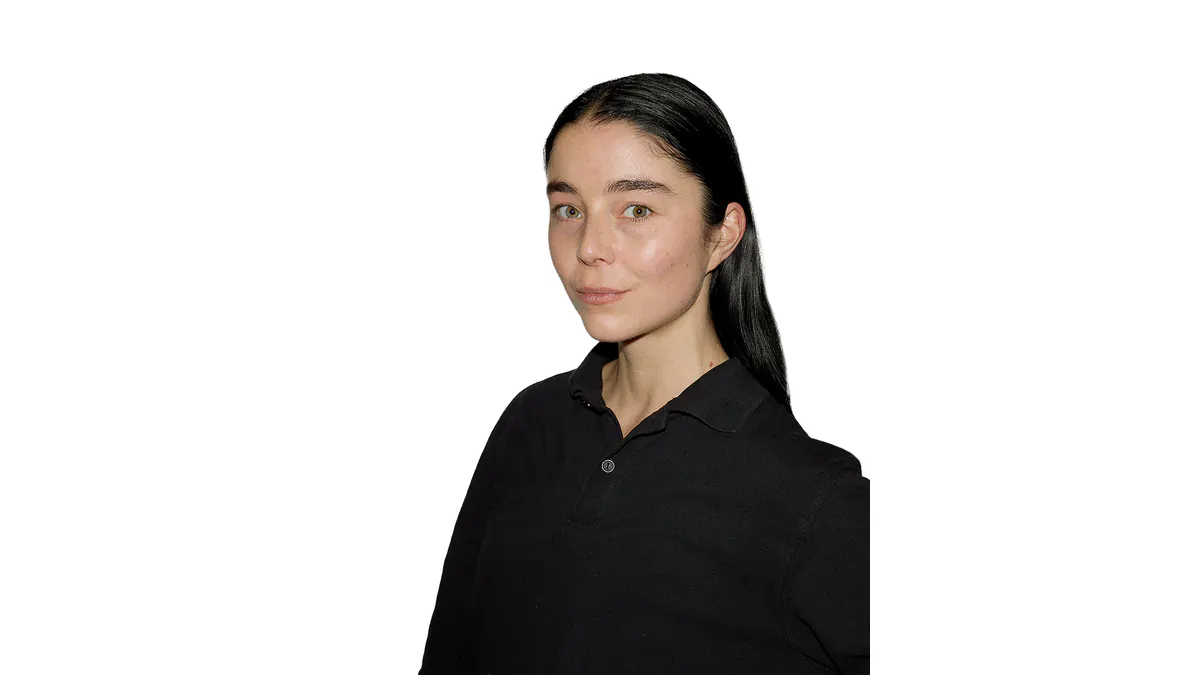
Julie Kegels has won the 2026 LVMH Prize, securing €400,000 and a year of tailored mentoring for a label that is only two years old. It is a decisive endorsement of the Belgian designer's clarity, and a rare chance to turn a vivid fashion proposition into a stronger working structure.
Vogue's report confirms Kegels as the main winner, with Zane Li's Lii receiving the Karl Lagerfeld Prize for Innovation and Anil Padia's Yoshita 1967 taking the Savoir-Faire Prize. Le Monde independently reported Kegels's award.
The ceremony recognizes a designer whose young label already has a distinctive point of view. Kegels, an Antwerp Royal Academy of Fine Arts graduate, established her house in 2024 and has developed collections around feminine identity, transformation, perception, and the busy multiplicity of modern dress. Her work does not treat clothes as static conclusions. It uses illusion, change, and narrative to make the wearer part of the design.
A Prize for Vision With Practical Weight
LVMH's terms for the 2026 edition set the main award at €400,000 with one year of mentoring. The Karl Lagerfeld and Savoir-Faire prizes each carry €200,000 and the same mentoring period. This is substantial support at the point when an emerging label must translate creative recognition into repeatable work.
Kegels's official prize profile places craftsmanship and experimentation at the center of her Antwerp practice. Vogue reported that the jury responded to her command of the client and the confidence with which she articulated her vision. That combination matters. A designer can make arresting clothes, but a house begins to take shape when the clothes, customer, and operating choices reinforce one another.
The grant creates room to build. It can fund the unglamorous but essential work behind a collection: technical development, production planning, sales administration, supplier relationships, and the people who keep those systems moving. The mentoring can sharpen the decisions around that spending, especially where an independent label needs specialist knowledge more than generic encouragement.
Kegels Has Named the Work Ahead
Kegels told Vogue that she wants to strengthen the label's infrastructure and expand its small team. She also identified financial management and access to manufacturers capable of handling complex pieces as areas where mentoring could help. Those ambitions connect directly to the character of her design.
Transformable garments, optical effects, and technically intricate construction demand more than a compelling sketch. They require patterns that preserve the idea, samples that resolve movement and fit, production partners willing to engage with complexity, and specifications precise enough to carry the result from atelier to delivery. For a label built on visual and structural surprise, operational capacity protects the creative language.
This is the most exciting possibility of the prize. Growth need not mean smoothing away the difficulty that makes the work distinctive. It can mean building the team and supplier network capable of executing that difficulty with greater consistency. The right infrastructure gives experimentation a dependable foundation.
Kegels's next Paris show was already close when the prize was announced. That timing gives the award immediate context. Fashion's calendar does not pause for recognition. Collections, fittings, casting, production, sales, and communication continue, and a young team has to absorb new attention while completing the work already in front of it.
Money and Mentoring Work at Different Speeds
The €400,000 grant is finite, while a team, supplier relationship, or production system has a continuing life. That difference makes sequencing important. A defined development project can resolve one technical bottleneck. A new role can redistribute recurring work. A stronger manufacturing relationship can improve several collections, provided the volume, quality, timing, and economics remain aligned.
Mentoring operates through another rhythm. Its value appears in better decisions: choosing the right specialist, finding a manufacturer suited to complex construction, strengthening financial control, or recognizing when an opportunity would stretch the label too far. Some of the most consequential advice may result in restraint, simplification, or a more deliberate timetable rather than a conspicuous expansion.
This is why capacity is a richer measure than scale alone. A capable label knows what it wants to preserve, where work is getting stuck, and which investment can release the next stage. For Kegels, the prize offers the resources to make that diagnosis with expert support and then act on it.
The Collection Remains the Center
The LVMH Prize has become one of fashion's most visible platforms for emerging designers, but its significance rests on what the recipients make next. Recognition can focus the industry's attention. The collection must still carry the house's point of view, meet its wearer, and arrive with the quality the design promises.
Kegels enters that next chapter with a language already in motion. Her explorations of womanhood, transformation, and visual illusion give the label a recognizable terrain without confining it to one trick. The opportunity now is to deepen that vocabulary while giving the business enough structure to support its complexity.
The Newsroom's Redress Design Award analysis follows another route from recognition toward a concrete next stage. The programmes differ, but both show why fashion prizes matter most when they create a bridge between an idea and its realization.
Kegels has earned a powerful bridge. The grant brings financial latitude, the mentoring brings access, and the win brings attention. Her task is not simply to become bigger. It is to make the label more capable of delivering the intelligent, mutable, finely considered fashion that won the room in the first place.