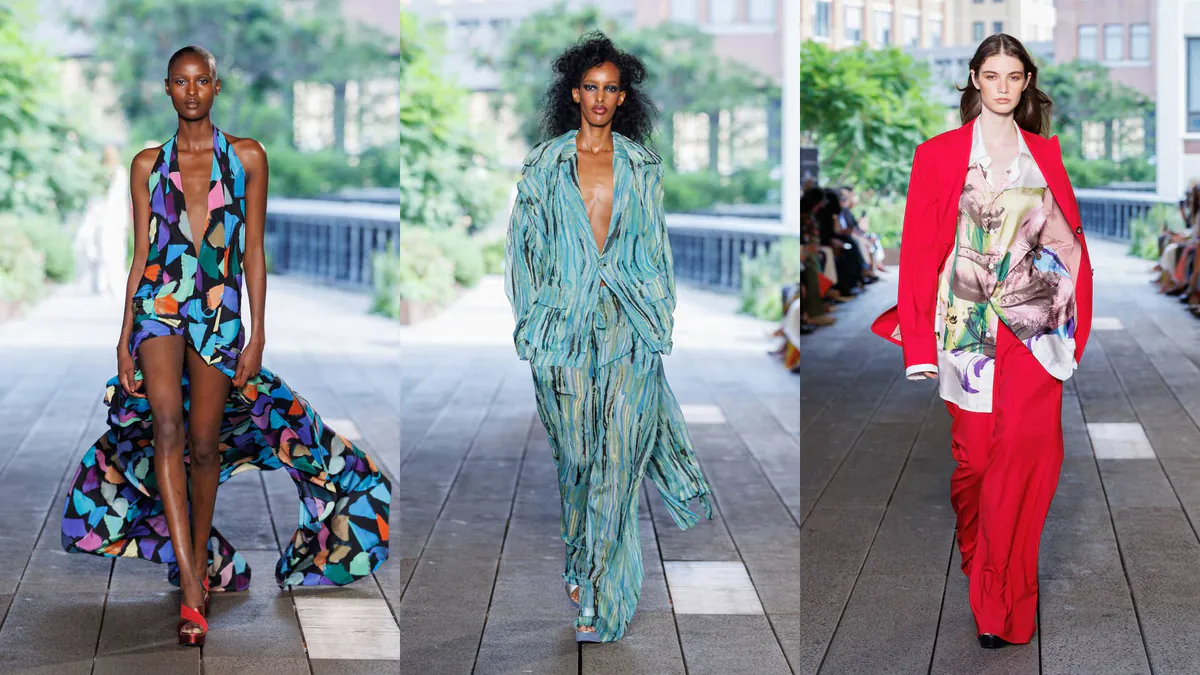
New York Fashion Week closed with a Spring 2027 proposition of exuberance with backbone. Romance met useful clothes, new hands refreshed famous house signatures, and grand-scale showmanship rested on exacting construction. Across six days, New York rediscovered the pleasure of dressing up without losing its instinct for a real wardrobe.
Joy took a disciplined shape
The season’s strongest trend was not a single color or hemline. It was a confident mix of apparent opposites. Tory Burch placed embroidered knitwear and decorative surfaces beside pencil skirts, cardigans, and tailoring. Harper’s Bazaar called it “opulent femininity” meeting American pragmatism, a pairing that captured much of the week’s energy.
Ralph Lauren moved between polished prep, distressed denim, Victorian romance, and controlled tailoring. ELLE’s review traced the collection’s ease from sharp suits to relaxed drape. The breadth felt coherent because the clothes carried the house’s command of American polish rather than chasing one seasonal silhouette.
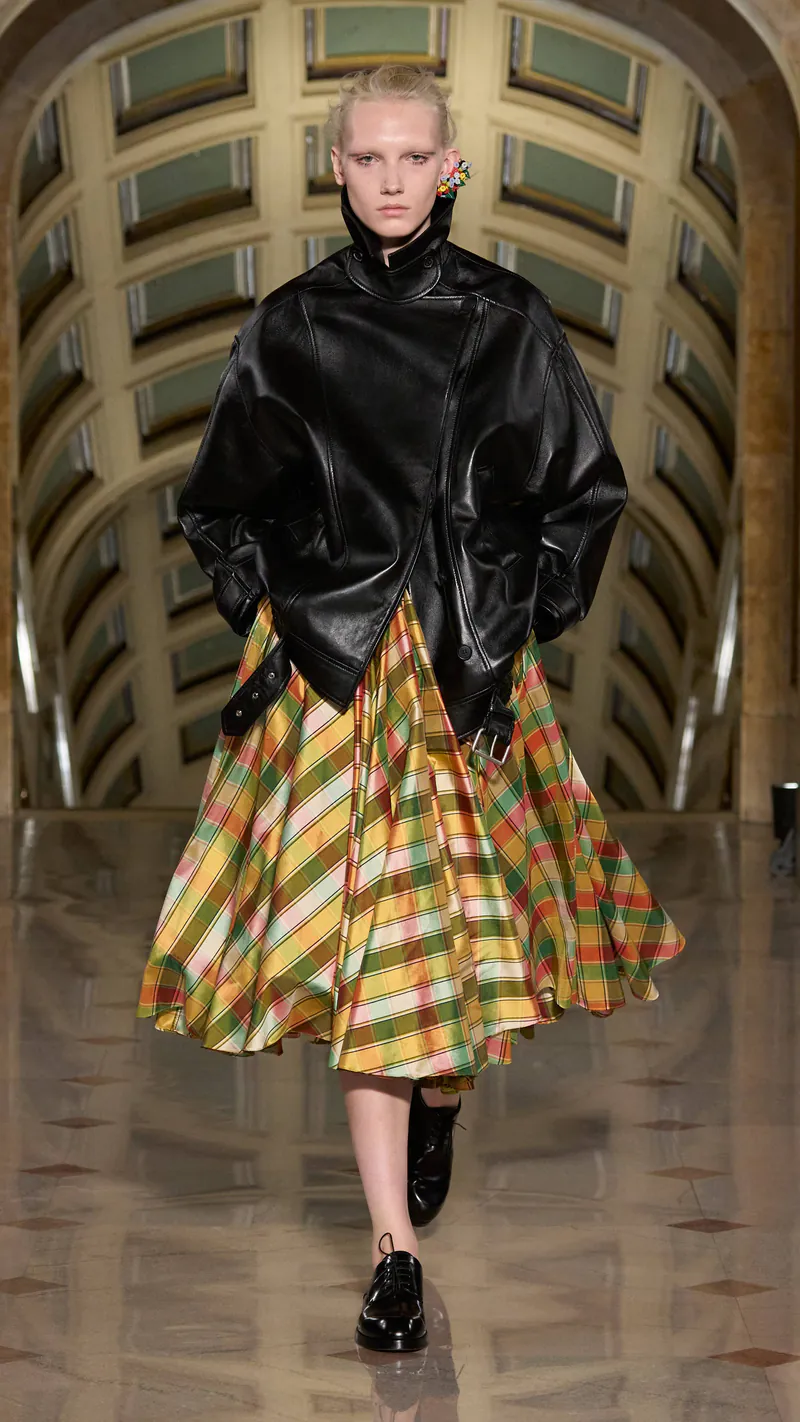
Altuzarra gave the idea a sharper edge. Fashionista documented menswear shirts, exposed bras, silk skirts, motorcycle jackets, and generous circle skirts, while Vogue’s runway report emphasized joy, color, and freedom. A checked circle skirt under a black biker jacket became an ideal New York combination: romantic, practical, and full of movement.
The final Associated Press recap found the same renewed pleasure in getting dressed across Tory Burch, Ralph Lauren, and Eckhaus Latta . Khaite supplied a darker counterpoint through corsetry, leather, crinoline, and exposed internal construction. Together, the collections made personality visible again, not as styling theatre alone but as something cut into the clothes.
Heritage became material, not costume
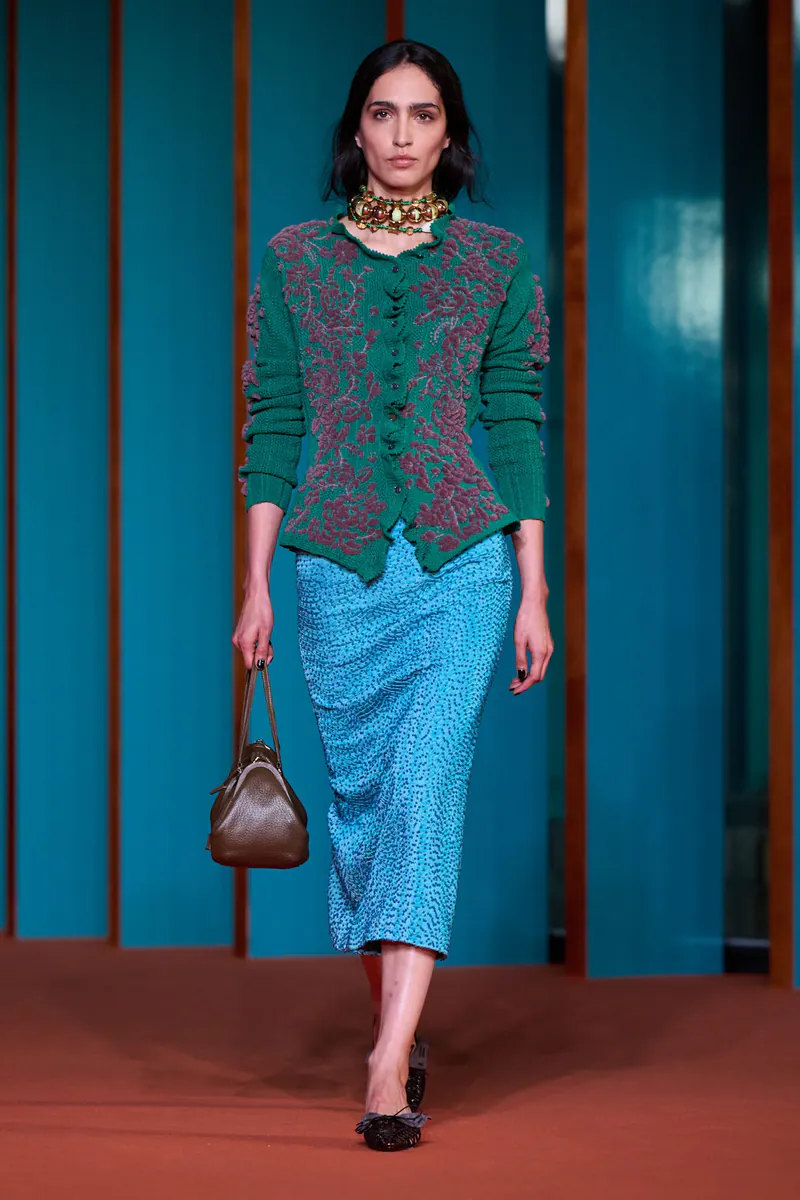
The official calendar opened with one of the week’s most compelling authorship stories. Diane von Furstenberg returned to the New York runway after nearly a decade, with Henry Zankov presenting his first collection as artistic director. Fashionista and Marie Claire showed how wrap dresses, archival prints, vivid color, and fluid fabrics were recut through Zankov’s textile-minded eye.
The result made recognition feel fresh. Familiar DVF signatures remained legible, but the rhythm and surface had changed. Lauren’s self-editing worked in a similar register, while anniversary seasons at Michael Kors , Carolina Herrera , and Coach turned longevity into a creative asset. The Associated Press noted 45 years for Kors and Herrera and 85 for Coach.
New York’s heritage houses looked strongest when they treated the archive as living material. The best collections kept the codes that still carried energy, then changed the grammar around them. Recognition became the starting point, not the final achievement.
The closing shows earned their theatre
The September 15 finale proved that New York’s practical streak could accommodate magnificent scale.
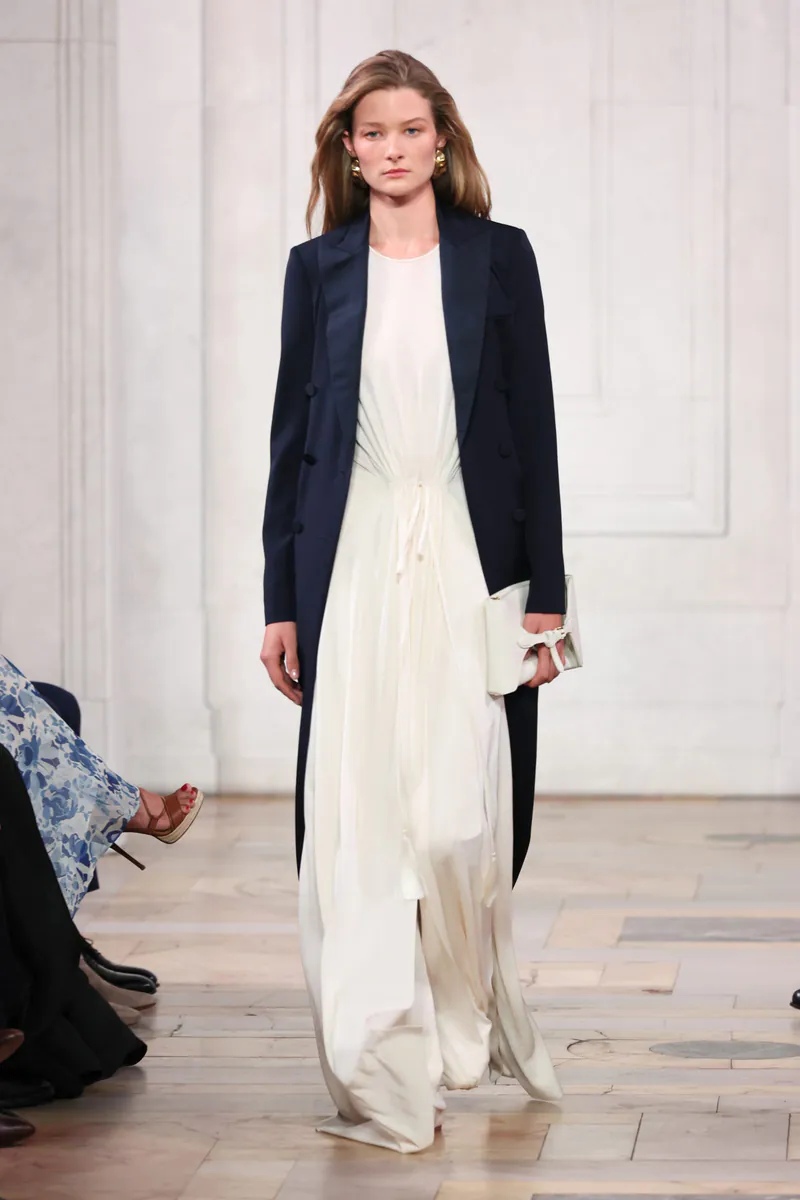
Sabyasachi returned to the New York schedule with a 72-look collection titled “Bengal Byzantine Broadway.” Vogue’s collection record documented indigo denim, plaid shirting, hand-painted silks, brocades, embroidery, jewelry, and sharply handled American dress codes. Bengal, Byzantium, Broadway, Mumbai, and an imagined Texas met through the designer’s command of surface, silhouette, and cultural memory.
Thom Browne then closed the official calendar at The Shed. Vogue’s review described a garden populated by a giant chrysalis, caterpillars, and insects, all built around metamorphosis. Bees, butterflies, and patterned wings landed on rigorously controlled jackets and shoulders.
Both designers understood that spectacle works when the clothes can hold the frame. Sabyasachi translated decorative abundance through established house codes. Browne anchored fantasy in precise tailoring. Their finales gave the week its cinematic finish and ensured the garments remained vivid after the scenery faded.
Material policy entered the main stage
The season also arrived with a consequential material policy. The Council of Fashion Designers of America barred animal fur from its official New York Fashion Week schedule, with an exception for items associated with Indigenous traditional and subsistence practices. The CFDA announcement turned a long-running industry debate into a formal condition of participation.
At the COS show, PETA protesters challenged the use of wool. Video showed CFDA chief executive Steven Kolb physically restraining protesters. Associated Press reporting says Kolb apologized and took leave pending an investigation, while PETA planned a meeting with him.
The episode widened the conversation from materials to institutional conduct. A fur-free calendar marked a substantial policy shift. The protest aftermath placed sourcing, alternatives, and accountability alongside the season’s design conversation, where they increasingly belong.
The runway map became more expansive
The official CFDA schedule remained the institutional center, but the city’s fashion week extended across a wider network of presentations and independent platforms.
Designer Smaranika Sarangi presented Drape Dead Elegance with Aiflorae at Asian NYFW on September 12. The organizer’s listing placed the presentation at Lavan Midtown alongside five other designer acts. Asian NYFW identifies itself as an independent event rather than part of the official CFDA calendar, adding another route for designers to meet a New York audience. Newsroom’s separate Sarangi update follows her runway momentum into London, while the Drape Dead Elegance profile carries the designer’s current work.
Bach Mai appeared on the September 14 official schedule. The Texas-born designer studied at Parsons and the Institut Français de la Mode before working at Maison Margiela under John Galliano, where he became first design assistant with a focus on Artisanal Haute Couture. His biography describes a New York house built around couture technique, irreverent glamour, and unabashed femininity. The CFDA member profile places Mai within the organization’s designer community, and the Bach Mai website presents the house and its collections.
Together, these appearances showed the breadth of New York’s runway ecosystem. Established institutions, independent showcases, emerging labels, and couture-minded American houses all contributed to a week whose authority came from range as much as rank.
New York finished with conviction
NYFW Spring 2027 did not settle on one uniform, and that was its strength. Designers paired romance with utility, ornament with familiar clothes, and historical reference with contemporary authorship. The most memorable looks found their charge in contrast.
Sabyasachi and Thom Browne gave the closing day grandeur. DVF demonstrated how a new creative author can animate famous codes. Tory Burch, Ralph Lauren, and Altuzarra made delight feel wearable, while Khaite brought discipline and shadow to the conversation.
The week also carried a sharper sense of responsibility. The CFDA’s fur policy changed the terms of the official calendar, and the COS protest aftermath made institutional behavior part of fashion’s season-defining story. Beyond the central schedule, Sarangi’s Asian NYFW presentation and Bach Mai’s official-calendar appearance added range to a city that remains at its best when many kinds of fashion share the spotlight.
Spring 2027’s clearest New York message was optimistic and exacting. Pleasure has greater force when construction, context, and conviction are visible with it.
For readers who want the history behind the modern calendar, Eila Mell’s New York Fashion Week: The Designers, the Models, the Fashions of the Bryant Park Era I may earn a commission is a photographic and interview-led account of the years when the tents gave the event a shared center. The publisher’s edition page identifies the 304-page Running Press edition by ISBN 978-0-7624-4355-0.
These Spring 2027 collections were shown during New York Fashion Week in September 2026. The official CFDA schedule ran September 10 through 15, alongside the independent events that gave the city’s fashion map its wider reach.