A Small Brief Opens Up Familiar Surroundings
DPReview's September mini-challenge marks Save Your Photos Month with themed photographic assignments. Originally announced as a daily challenge, it now runs in 48-hour rounds. Each response must be photographed during its round and submitted with at least a one-sentence caption.
The opening theme, “What's on your dinner plate,” captures the appeal of a modest brief. A familiar subject becomes a reason to consider light, arrangement, distance, and the moment of exposure. A meal can be a still life, a record of a routine, or a portrait of the person who prepared it.
That flexibility makes a short assignment useful. The theme supplies a starting point, and the photographer decides what kind of picture to make. A bowl beside a window, a hand reaching across a table, and the remains of dinner can all carry different observations about the same occasion.
Give the Frame One Clear Intention
Start with the quality that caught your attention. It might be a diagonal shadow, a colour repeated in two objects, or the contrast between a carefully arranged surface and a spontaneous gesture. Naming that quality helps organise the picture.
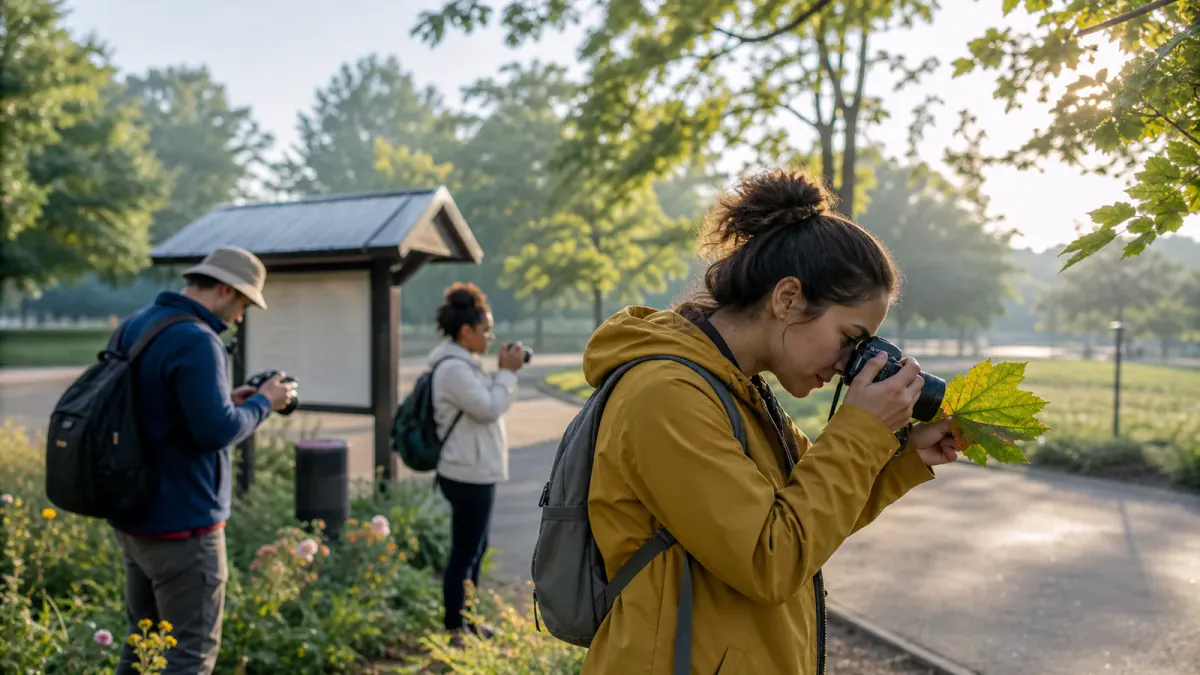
Then make a few deliberate variations. Move closer to simplify the frame. Step back to include the room or surrounding street. Raise or lower the camera to change the relationship between subject and background. These small changes reveal how much of the photograph comes from position, rather than from the subject alone.
Light offers another useful variation. Window light can describe the texture of a commonplace object, while a harder source can make its shadow part of the composition. A brief assignment gives that observation a place to go: one finished photograph that expresses a specific choice.
This is a practical form of photographic practice . Repetition builds familiarity with the process, while changing subjects invite fresh decisions. The value becomes clearer when each response has a recognisable intention.
Work at a Scale You Can Repeat
A short observation period helps fit the challenge around ordinary life. Fifteen or thirty minutes can be enough to explore a subject already nearby. Work with the camera you can comfortably carry and use, whether that is a phone or a larger system.
A limited set of frames also makes selection more focused. Once the basic idea is visible, vary one element at a time. Keep the framing and wait for a gesture, or hold the subject still and try a different viewpoint. The resulting comparisons are easier to understand than a large group of unrelated attempts.
Choose one photograph while the reasons for making it are still fresh. Ask where the eye lands, what holds it, and whether anything at the edge competes with the subject. A tighter crop may clarify the idea. Another frame may preserve a small expression that matters more than tidy geometry.
A missed round can simply lead into the next assignment. The project works as a recurring invitation to make photographs, with room for both quick responses and more considered attempts.
Let the Caption Add Context
A caption can contribute something the frame cannot show on its own: why an object is kept, who prepared a meal, or what changed in a familiar place. One clear sentence is often enough to give an ordinary photograph greater specificity.
Write from what you know. Identify the person, place, or occasion accurately, and distinguish an observed detail from your interpretation of it. If the photograph centres on a personal object, a short account of its significance may be more useful than a list of its visible features.
Read the picture and caption together before sharing. Check the frame for addresses, documents, or details you did not intend to publish. With portraits, agree on public sharing with the people involved. These choices are part of making a considered photograph for an audience.
Bring the Photograph Into the Shared Album
DPReview directs submissions to its community album . New forum members need two normal posts before uploading. The announcement carries the current theme and schedule, and DPReview plans a selection of favourites after September.
Seeing other responses can widen your understanding of a brief. Notice how another photographer uses distance, colour, or a particular moment to arrive at a different interpretation. A shared subject makes those differences in approach especially easy to see.
Keep your original files in a dated folder alongside the caption and theme. That small record preserves both the photograph and the reason it was made. It also makes the month's work easier to review as a coherent set.
Read the Month as a Sequence
At the end of the project, bring the photographs together at a similar viewing size. Look for recurring colours, distances, subjects, and kinds of light. Those patterns can reveal an emerging visual interest that was less obvious from one assignment to the next.
Choose a small sequence with a beginning, a change of pace, and a closing image. Alternate close detail with wider context where the pictures support it. Watch how one frame changes the meaning or mood of the next.
Some photographs may suggest a longer project: an object with a family history, a familiar street at changing hours, or a routine shared by several people. Return to those subjects with more time. A compact assignment can become the first clear sketch of a sustained body of work.