Three Ways to Return to Photography's Past
The appeal of a film-inspired camera can begin with the picture, the act of making it, or the object left afterward. Grain and color belong to the first. A deliberate sequence of exposures belongs to the second. A photograph held in the hand belongs to the third.
Three September 7 stories approach that appeal from different directions. PetaPixel's Jeremy Gray reports on Strange Inventions Lab's reusable e-paper camera . Chris Gampat at The Phoblographer revisits early digital shooting habits . Digital Camera World's Gavin Stoker questions the appeal of simulated film routines .
Read together, they offer a useful way to think about photographic nostalgia. The look, the ritual, and the finished object are distinct creative choices. Each can influence the work, and each deserves to be considered on its own terms.
The Look: Color, Tone, and Texture
Gampat's reference point is the early digital era. He proposes choosing camera settings more deliberately, reducing automatic intervention, and exploring the color and texture associated with older digital photographs. That expands the conversation beyond chemical film to the visual memories formed by earlier sensors, cameras, and habits.
Film emulation approaches appearance from another direction, using digital processing to evoke characteristics of photographic film. In either case, the creative interest lies in what a treatment does to the picture: how it organizes color, describes light, and gives surfaces their particular texture.
Subdued color can draw attention to a gesture or a relationship between shapes. A stronger grain-like texture can change the apparent smoothness of a portrait or the atmosphere of a night scene. A warm palette may connect otherwise separate elements. These decisions work through the photograph's subject and structure.
Compare treatments on the same frame before changing equipment or location. Keep composition and lighting constant, then notice which relationships become clearer. Look at skin, deep shadows, and the transitions around highlights, as well as the overall mood. The most useful choice is one you can describe in terms of the image.
The Ritual: Shape the Pace of a Session
Fujifilm's X half makes the shooting routine an explicit design choice. Its May 2025 announcement describes Film Camera Mode, with sequences of 36, 54, or 72 exposures and a frame-advance lever used after each image.
Those features change the actions surrounding the exposure. A color treatment affects the image's rendering, while a frame budget can influence when the photographer chooses to press the shutter. A repeated physical action can give the session a recognizable rhythm.
For personal work, a limit may encourage spending longer with a scene. You might wait for a gesture, move a few steps, or consider the relationship between the foreground and background before making another frame. The value is in the attention that the routine encourages.
On an assignment, immediate review can serve a different purpose. Confirming focus, expression, and exposure helps a photographer respond while the moment or setup is still available. The useful rhythm follows the work being made.
Stoker acknowledges the appeal of slowing down while challenging manufacturers to offer more than familiar sensations. His argument sharpens the distinction between a routine chosen for a purpose and inconvenience presented as an end in itself. Photographers can make that choice directly, including through a personal frame limit on equipment they already own.
The Object: A Photograph That Stays in View
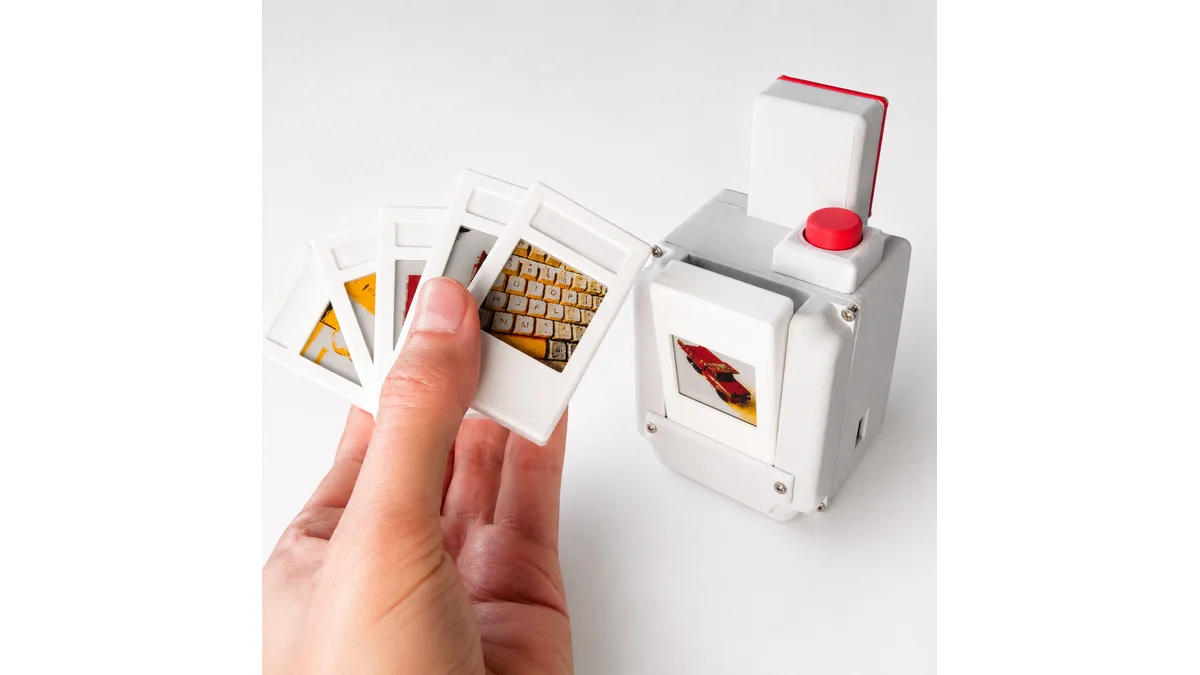
Strange Inventions Lab's Camera with Digital Film places the physical result at the center. Maker Jens designed a Raspberry Pi-based camera that writes photographs to removable e-paper cartridges. Each display retains its image without continuous power and can later be rewritten.
The display uses black, white, red, and yellow. Its limited palette gives the resulting object a particular graphic character, with processing options that adapt the captured photograph to those colors.
The maker describes an intermediate DIY build involving soldering, Raspberry Pi setup, and troubleshooting. The project files are offered for personal, non-commercial use. His documentation also leaves cartridge-connection durability uncharacterized and instructs builders to wait until writing has finished before removing a cartridge.
The photographic interest is the relationship between visibility and selection. A picture occupying a cartridge remains present on a shelf or desk until someone chooses another. That is a different encounter from passing an image on a screen.
A paper print offers another kind of permanence and exchange. It can be given away while the photographer keeps the negative or digital file. A reusable electronic cartridge makes the display itself part of what is kept, changed, or handed to another person.
The related one-word photo-selection exercise starts with a similarly deliberate act of attention: naming a response and connecting it to something visible in the frame. Selecting a photograph for display extends that decision into everyday space.
Begin With the Experience You Want
The three choices suggest three practical questions:
- What should change in the finished photograph's color, tone, or texture?
- What should change in the pace and attention of the shooting session?
- What should remain afterward: a file, a print, or a reusable display?
Try separating those questions for one small project. Make a short sequence with a familiar camera, compare two treatments on the same selected frame, and choose one photograph to keep physically visible. Notice which part of the process changes your engagement with the work.
Gampat finds possibilities in earlier digital habits. Stoker asks for ambition beyond nostalgia. Jens explores a reusable image object with its own material character. Their different approaches make room for a more precise choice: carry forward the part of photography's past that helps you make, select, or live with a picture now.