Two ways to find the frame
Fujifilm has made composition the centre of the Instax Pal 2. An optical viewfinder , a top monitor, a dial, and a lever give the palm-size camera a fuller vocabulary of gestures. Raise it to the eye, look down into it, choose a treatment, and release the shutter. The redesign puts those decisions back into the photographer’s hands.
The original Pal concentrated almost everything on a shutter button and a companion app. The second version makes the camera itself a place to look and choose. Its small scale becomes more interesting when it supports different ways of attending to a scene, rather than simply making the device easy to carry.
In her hands-on account for Digital Camera World , Hillary K. Grigonis describes the one-inch top screen as a waist-level finder and gives the camera’s weight as 41 grams. A downward glance changes the photographer’s stance. At a table, on a walk, or among friends, a lower viewpoint can bring foreground objects into the composition and change the relationship between a face and its surroundings.
The optical finder offers the familiar alternative of eye-level framing. These are different ways of approaching a picture, each with its own rhythm. The practical attraction is the choice between them in a camera small enough to hold almost unobtrusively.
Small files, deliberate timing
The Pal 2 records 10-megapixel images from a 1/3.06-inch sensor and holds 100 photographs internally, with microSD expansion. Those specifications suit its role as a small digital companion. The useful question is what a photograph will become: a phone image, a shared sequence, or a compact print.
Grigonis places its early-2000s-style output above the Kodak Charmera and below the Camp Snap CS-Pro in her initial comparison. She also reports shutter lag that makes exact timing difficult. That is a concrete limitation for fleeting expressions and gestures, especially when the appeal of a tiny camera lies partly in its availability at informal moments.
For a photographer, timing and composition belong together. A carefully arranged background cannot recover an expression that has already changed. Scenes with a little duration, such as someone leaning at a window or a conversation across a table, offer more room to work with a slower response. The camera’s character should guide the subject as much as its appearance guides the mood.
Black and white bodies, separate prints
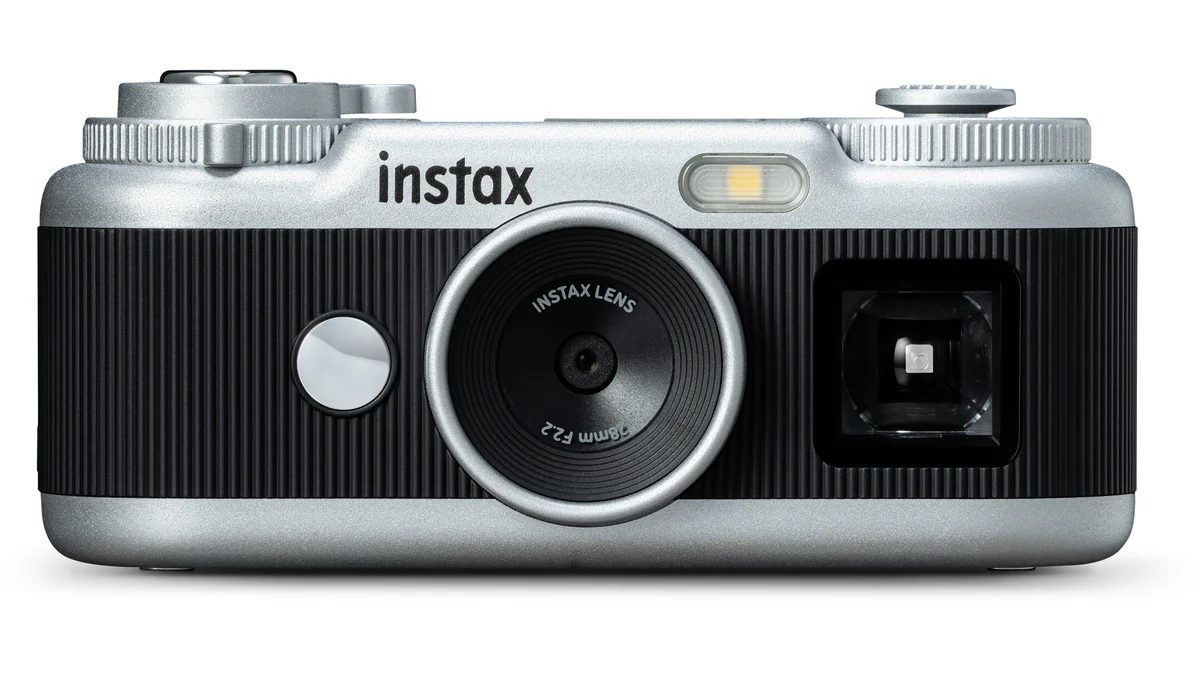
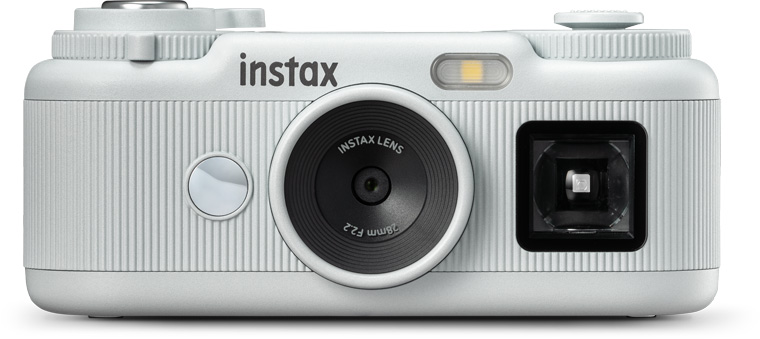
The black and white versions have silver fronts and controls that recall miniature film cameras. The Pal 2 captures digital files and has no built-in printer. Physical output comes through compatible Instax Link printers or selected Evo and LiPlay hybrid cameras.
Separating capture from printing changes the moment of commitment. A photograph can be made quickly, selected later, and printed for a particular person. It also means that the small camera is only one part of the kit when a physical photograph is the intended result. That distinction matters more than the film-camera styling.
PetaPixel’s launch coverage describes the app’s remote shutter and image-transfer functions. It reports a US launch price of $169.95 and availability later in September 2026. Fujifilm’s Japanese announcement sets October 9 for that market.
The print adds another photographic decision: which image deserves to leave the screen? A small portrait made for a friend has a different destination from a sequence posted online. Selecting for that destination can make the editing stage as purposeful as capture.
Choose the shape before the subject moves
Fujifilm’s product announcement specifies Mini, Square, Wide, and frameless formats. The framed options use 3:4, 1:1, and 16:9 proportions respectively. It also provides 30 digital effects, with six loaded onto the camera at a time and selected through the dial.
Those proportions change the work of composition. A vertical frame can concentrate attention on a standing figure. A square encourages the photographer to balance the subject against its immediate surroundings. A wide rectangle gives a conversation, a street frontage, or a line of people more horizontal room.
Choosing one format for a short outing is a useful creative constraint. It encourages recognition: which subjects fit the frame, where does empty space help, and when does an edge cut too close? A selected effect can serve the same purpose for colour and contrast. Consistency makes the differences between photographs easier to see.
The Animation mode combines up to ten frames into a short flipbook-style sequence. Here the subject is a movement rather than a single instant. A turn of the head, a hand entering the frame, or a repeated gesture gives the sequence a beginning and an end.
A different route from picture to object
The Pal 2 brings together the three choices explored in Newsroom’s film-inspired digital photography essay: image character, shooting rhythm, and physical output. Its effects shape the file, its controls shape the act of taking a picture, and a separate printer turns a selection into an object.
In my Kisau Photography essay on camera brands that changed photography , I wrote about the pleasure of using the Instax Mini Evo and making small prints. The Pal 2 separates those experiences into different devices. That offers a distinct way to work: carry the camera, gather pictures, then decide which ones to give a physical life.
The redesign’s strongest idea is that a small camera can invite a fuller act of looking. Framing, choosing a visual treatment, and making a print are connected decisions. The Pal 2 places each within reach while leaving the photographer to decide how they belong together.