The PEN Idea Behind the Silhouette
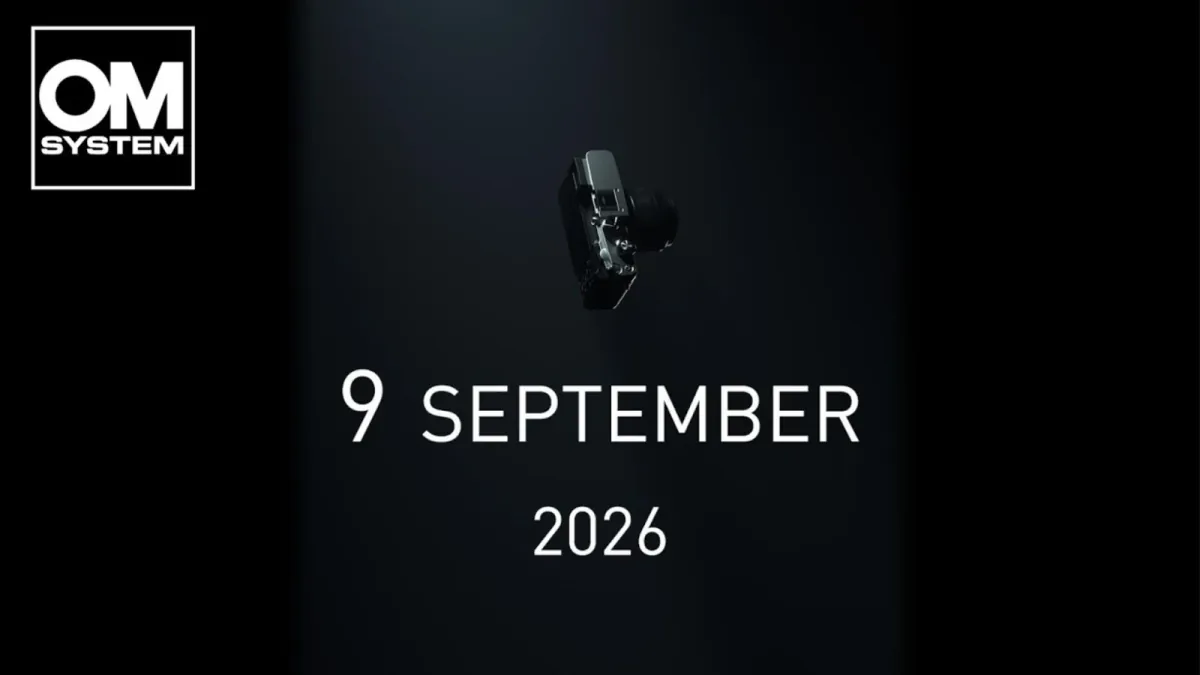
OM System’s August 26 teaser used camera history to frame a coming announcement. Its short official video moved through the PEN lineage before revealing a dark camera silhouette and a September 9, 2026 date. Compact proportions and a built-in viewfinder carried the message: this was a camera presented around the act of taking photographs.
The September 9 announcement subsequently named the camera OM SYSTEM PEN. The company’s official product page now specifies a Micro Four Thirds lens mount, a 20.4-megapixel sensor, and a 2.36-million-dot electronic viewfinder. Those details resolve the questions the original campaign left open.
The teaser remains an instructive piece of positioning. It led with a recognizable photographic tradition and a way of handling a camera. Understanding that choice helps explain the PEN’s appeal beyond any single specification: a small camera can be a regular companion, with controls and viewing options that make everyday subjects worth stopping for.
Heritage Connected to Everyday Use
PetaPixel’s August report read the campaign as a return to the PEN family or its spirit. Amateur Photographer focused on the rangefinder-style silhouette, comparing it with the digital PEN-F and considering its place among retro-styled cameras.
Those were interpretations of the same campaign, with different emphases. One located the camera within a lineage. The other connected its shape to expectations about handling and the compact-camera market. The subsequent product announcement gives those early readings a concrete reference point.
For a photographer, heritage becomes useful when it describes an experience. A compact body changes what fits into a small bag. A finder changes where the camera sits while composing. Accessible controls can keep attention on a subject through a change in light. The design language carries associations, but its lasting value comes from those physical relationships.
That makes everyday use a demanding brief. A camera may accompany a walk, a family gathering, a train journey, or an unplanned portrait. Each setting places different demands on how quickly it can be brought into use and how comfortably it stays with the photographer.
What an Eye-Level Finder Changes
The viewfinder was one of the campaign’s clearest visual signals. Bringing a camera to the eye creates a distinct working posture, with the frame held close and surrounding distractions reduced. It can help a photographer concentrate on the picture’s edges, the position of a subject, and the moment when several elements align.
A rear screen offers a different relationship with the scene. It makes low or high viewpoints easier to explore and can leave more of the photographer’s face visible during a portrait. Moving between screen and finder gives composition a wider range of physical possibilities.
The PEN’s official specification includes both an electronic finder and a vari-angle touch display. That combination matters because camera height is a compositional choice. Eye level can establish directness. A lower position changes the relationship between a person and the background, while an elevated view may simplify overlapping shapes.
The useful question is how easily a photographer can move between those positions. The Newsroom’s portrait composition tutorial explores that connection between camera placement and depth. A viewing option earns its place when it helps make the intended photograph.
Portability Includes the Lens
The announced camera’s Micro Four Thirds mount gives the compact-body idea an interchangeable-lens foundation. A photographer can pair the body with a small prime for a consistent field of view or a zoom for changing distances.
The practical unit is the complete camera-and-lens combination. Body dimensions alone say little about how a kit sits on a strap, fits into a bag, or balances in the hand. A lens that extends substantially in front of a small body changes all three.
This is especially important for a camera intended to be carried regularly. A modest kit can encourage working with a familiar field of view. A more versatile lens can reduce the need to change equipment during a walk. The better fit depends on the photographs being made and the working distance they require.
PetaPixel’s subsequent PEN review illustrates the distinction between appearance and handling. Chris Niccolls liked its usefulness as a travel companion while finding the grip shallow for his hands. Those observations belong to his testing, and make a useful reminder that compactness is experienced through the complete grip, controls, and lens arrangement.
A Camera That Supports a Photographic Habit
OM System’s current PEN page also emphasizes custom color and monochrome recipes. Such controls can give an everyday series a consistent starting point, helping a photographer explore how color relationships or tonal contrast affect a familiar subject.
Consistency grows through repeated use as well as settings. Carrying the same camera through different light teaches the photographer what to expect from its controls and framing. Returning to a location reveals changes in gesture, weather, and activity that a single visit can miss.
That is the strongest idea in the original campaign. PEN heritage supplied recognition, the viewfinder supplied a clear photographic gesture, and the small silhouette suggested a camera that could join ordinary life. The announcement turned those signals into a defined product. The photographic opportunity lies in using that form to look closely and often.