A Photographic History Built Through Images and Their Circulation
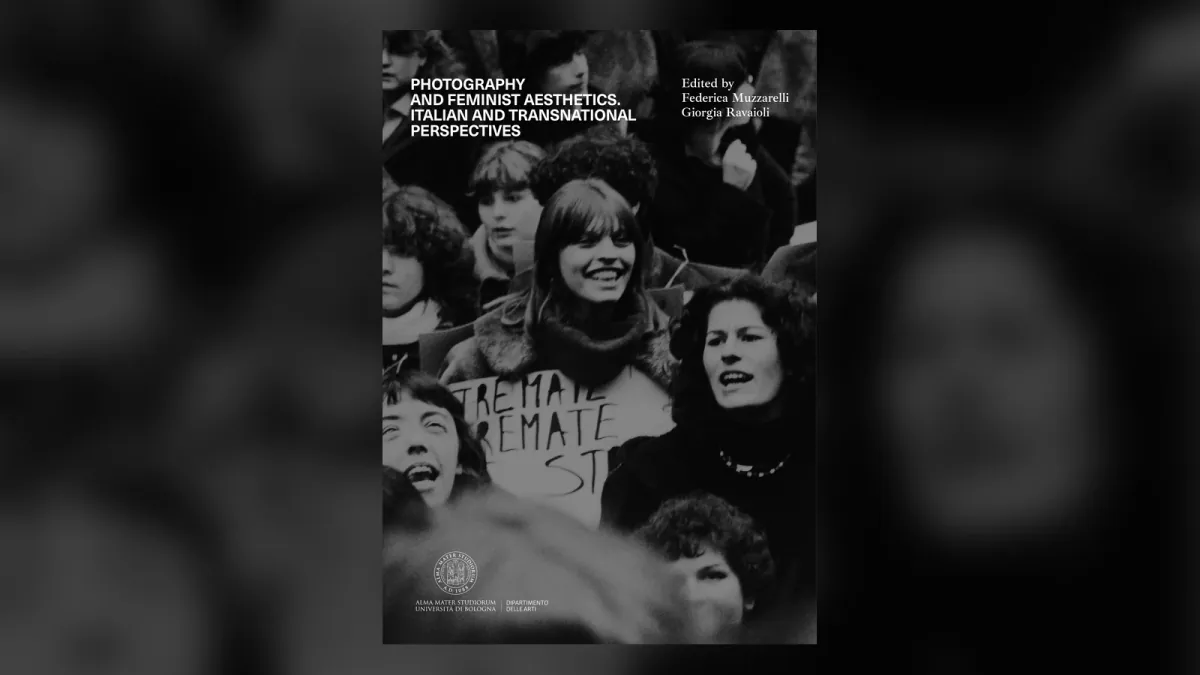
Photography and Feminist Aesthetics: Italian and Transnational Perspectives brings the making of photographs into conversation with the archives, publications, exhibitions, and working relationships that give them a public life. Edited by Federica Muzzarelli and Giorgia Ravaioli, the University of Bologna volume gathers more than 40 contributions across 555 pages.
The open-access edition was published in July 2026. Its essays grew from the September 2025 Bologna conference associated with the Italian Feminist Photography research project. The university's publication announcement places that work within a network of archives, libraries, museums, and photographic collections.
That breadth gives the book a compelling organizing question: how does a photograph enter history? The answer involves the person behind the camera, but also the people who preserve a print, assemble a publication, commission an exhibition, or recover a name from a poorly described archive.
Six Routes Through Feminist Photography
The contents move through six connected fields: research networks and historical writing, transnational methods, labor and photographic industries, artistic practice, photobooks and magazines, and reportage and political exchange.
The arrangement makes room for different kinds of photographic work. A study of studio photographers can sit beside research into industrial production. An exhibition can be considered alongside a movement newspaper. A photograph's material form and route to its audience become part of its meaning.
For readers approaching the volume through feminist art , this provides a particularly useful photographic emphasis. Recovering an overlooked image begins another set of questions. Who made it? Where did it circulate? What did its caption say? Which collection preserves it, and how has that collection described it?
Muzzarelli's opening essay locates the research in institutions and dissemination channels as well as individual careers. That perspective encourages a fuller account of authorship, one attentive to professional relationships and social conditions. The camera matters, and so does the setting in which its images become visible.
Japan Connects Curating With Political Memory
Two Japanese studies offer a clear route through the volume's transnational structure. Mariko Takeuchi's contribution appears in the opening section on research networks and the making of photographic histories. It examines gender, experimental curatorial practice, and the visibility of Japanese photography.
Takeuchi discusses I'm So Happy You Are Here: Japanese Women Photographers from the 1950s to Now as a curatorial project, placing the book and exhibition in a longer history of representation. The question extends from which photographers are included to how exhibitions create the conditions in which their work is encountered.
Later, in the section on reportage and political exchange, Federica Cavazzuti follows Matsumoto Michiko's photographs during and after Japan's Women's Liberation Movement of the 1970s. Her discussion connects the images with the movement's own publications, the mainstream press, and Matsumoto's subsequent photobooks.
Reading those contributions together brings institutions and lived political experience into the same conversation. One begins with curatorial visibility, the other with photographs made among a movement's participants. Their different scales make the international approach tangible: a history emerges through the relationships between photographs, people, and the settings in which images are shared.
The Printed Page Is Part of the Photograph's History
The section on photobooks, magazines, and feminist visibility is especially rich in possible reading paths. Its subjects include Suzanne Santoro and Marianne Wex, combinations of word and image in self-narration, publications associated with home-birth movements, and photography in the Italian women's movement press.
A photobook gives photographs a particular pace. Sequence creates connections, page turns delay or reveal information, and captions can anchor an image in an event or send it toward a broader interpretation. Magazine and newspaper formats bring their own rhythms, audiences, and circumstances of distribution.
These distinctions offer a practical way to read historical photographs. Look at the image, then look at the page around it. Notice scale, placement, neighboring pictures, and the relationship between text and image. Follow the publication's intended audience as carefully as the photographer's biography.
The same approach is useful when an image moves into a later exhibition or collection. Its new setting may bring it to a wider audience, while the earlier printed form retains evidence of how it first worked in the world.
An Open Edition With Several Points of Entry
The volume's publication page confirms that its contributions underwent peer review and that the work is distributed under CC BY 4.0. The complete PDF includes the essays, notes, bibliographies, and credits, making it possible to follow an argument directly into its supporting references.
Start with a subject that already interests you: Japanese photography, archival description, industrial labor, political reportage, or the printed page. Then follow a connection into another section. The six-part structure supports that kind of lateral reading, allowing a shared question to move between countries and forms without flattening their differences.
The volume also sits usefully beside Women Photographers Are Dangerous, which introduces a broad history through selected images. Here, the conference format opens space for sustained attention to the systems around the photographs.
Photography and Feminist Aesthetics gives that surrounding work a visible place in photographic history. Its open edition invites readers to follow the journey from an image's creation to its publication, preservation, and renewed interpretation.