From Launch to the First Test Image
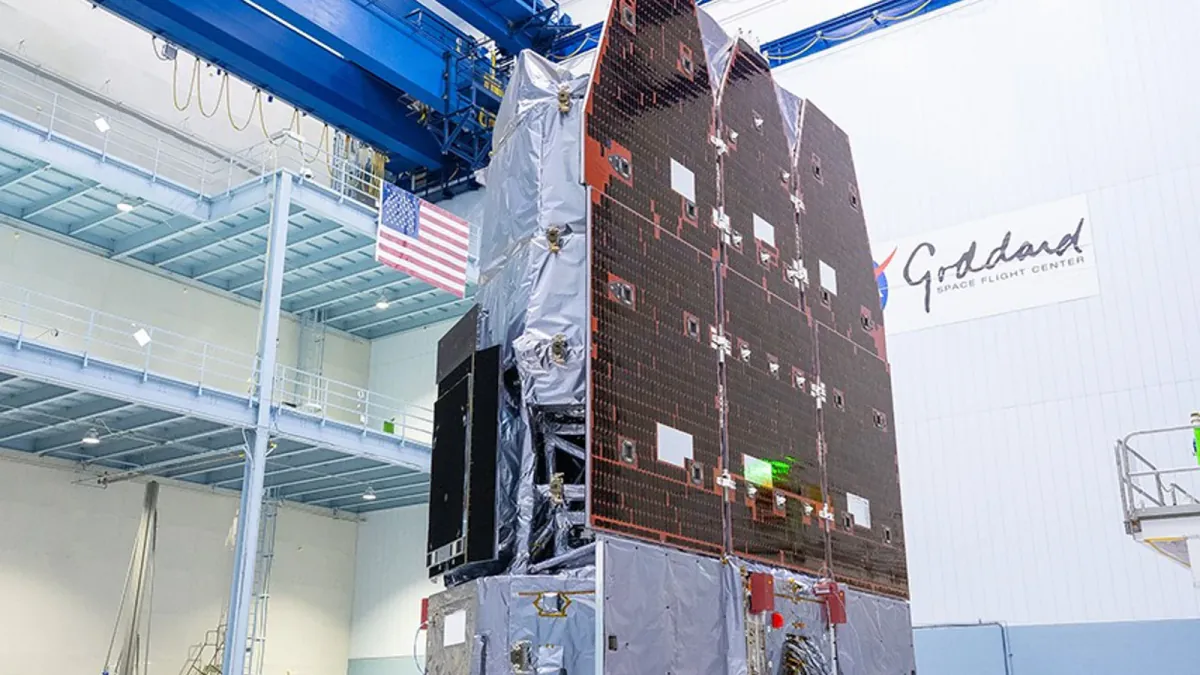
NASA's Nancy Grace Roman Space Telescope has begun the photographic work that follows a successful launch. The observatory lifted off at 7:26 a.m. EDT on August 30 from Kennedy Space Center's Launch Complex 39A. It then separated from the Falcon Heavy second stage and set out toward its operating region near the second Sun-Earth Lagrange point.
That departure followed the final review described in the Newsroom's launch-readiness report. NASA's launch account also confirmed deployment of the solar panels and lower instrument sun shade. Together, these milestones established the powered, free-flying observatory that the instrument teams could begin bringing into operation.
On September 15, NASA reported that Roman's Wide Field Instrument had been activated . The agency also released an initial test image and described successful early checks of the Coronagraph Instrument. Roman's journey now includes the first measurements from its principal camera in space.
What the First Starlight Shows
NASA describes the test image as a field of strongly out-of-focus stars recorded while the detector array remained in its launch position. Each broad star image spreads across many pixels, giving the team a starting point for optical alignment and focus.
The distinction between a diagnostic exposure and a finished science image is photographic as well as technical. A diagnostic frame answers a defined question about the instrument. Its value lies in the information it supplies for the next adjustment, rather than in how polished it looks.
The activation report records checks of the calibration system, element wheel, and focus mechanism. It identifies fine guidance and focusing as work ahead, while retaining early 2027 as the expected timing for the first science images. These are successive stages in turning captured starlight into precise observations.
For a photographer, the familiar idea is the purposeful test frame. A lighting test, focus check, or reference exposure can be indispensable even when it is never intended as a final picture. Roman applies that discipline to a camera operating far beyond physical reach.
A Wide Field Changes the Photographic Assignment
Roman's Wide Field Instrument combines 18 detectors in a roughly 300-megapixel infrared camera. The scale is especially meaningful when paired with its field of view. NASA's instrument overview says one exposure covers more sky than the apparent area of a full Moon.
The Hubble comparison becomes clearer when the instruments are named. NASA puts Roman's field at about 200 times that of Hubble's infrared Wide Field Camera 3 images, and nearly 100 times Hubble's widest Advanced Camera for Surveys exposures. Roman is designed to maintain similar infrared resolution while covering much larger areas.
This is a difference in photographic assignment. A tightly framed study can reveal intricate detail in one subject. A broad survey places many subjects within a consistent observational framework. Both can be detailed, but they organize attention at different scales.
The wide field is useful for studying populations and relationships: how galaxies are distributed, how stars vary, and where uncommon events appear among a great many ordinary-looking sources. It turns the image from an isolated view into one part of a larger map.
Commissioning Builds a Consistent Camera
NASA's commissioning overview describes the three-month journey as an active period of adjustment, calibration, and preparation for science operations. The destination is a halo orbit around Sun-Earth L2 , about a million miles from Earth.
That region offers a comparatively steady thermal environment and a broad view of the sky with little obstruction from Earth. Power, temperature, pointing, and communication all support the same objective: giving the instruments repeatable conditions for recording faint light.
Consistency is the connection to everyday photographic practice. In a carefully controlled series, changes in the subject should remain distinguishable from changes introduced by the camera or processing. A varying black level or uneven response across a frame can complicate a comparison. Calibration provides the reference needed to interpret such differences.
Roman's much larger task brings optics, detectors, guidance, and data processing into that relationship. The finished observation is a product of the whole imaging system. Its scientific usefulness comes from knowing how a recorded signal relates to the light that reached the telescope.
Repeated Images Reveal Changing Light
NASA's exoplanet program for Roman illustrates why repeated exposures are so important. The mission will monitor dense star fields for brief changes in brightness, including those produced by gravitational microlensing.
In a microlensing event, a foreground object passes close to the line of sight to a more distant star. Its gravity bends the background starlight, temporarily increasing the apparent brightness. Measuring that change can reveal an intervening object that is too faint to see directly.
The Coronagraph Instrument takes a complementary approach. It is designed to suppress a star's glare so that faint nearby planets and dusty material can be imaged. One method reads a change across a sequence, while the other separates faint reflected light from an overwhelmingly bright neighbor.
These goals give Roman's images a purpose beyond the appeal of a single cosmic panorama. The photographs form measurements, comparisons, and time series. A small change in one part of a large field may become the most consequential feature in the picture.
Roman has crossed from launch preparation into instrument operation. Its first test exposure makes that transition visible, while commissioning connects each adjustment to the broad, repeatable surveys the observatory was built to make.