The practical answer
Train pattern recognition by revisiting one route, identifying a repeated visual relationship, and comparing a successful frame with a near miss. Separate the pattern from the subject: a row of windows supplies structure, while a gesture or interruption gives the photograph a reason to hold attention.
Recognize the Arrangement, Then Find the Photograph
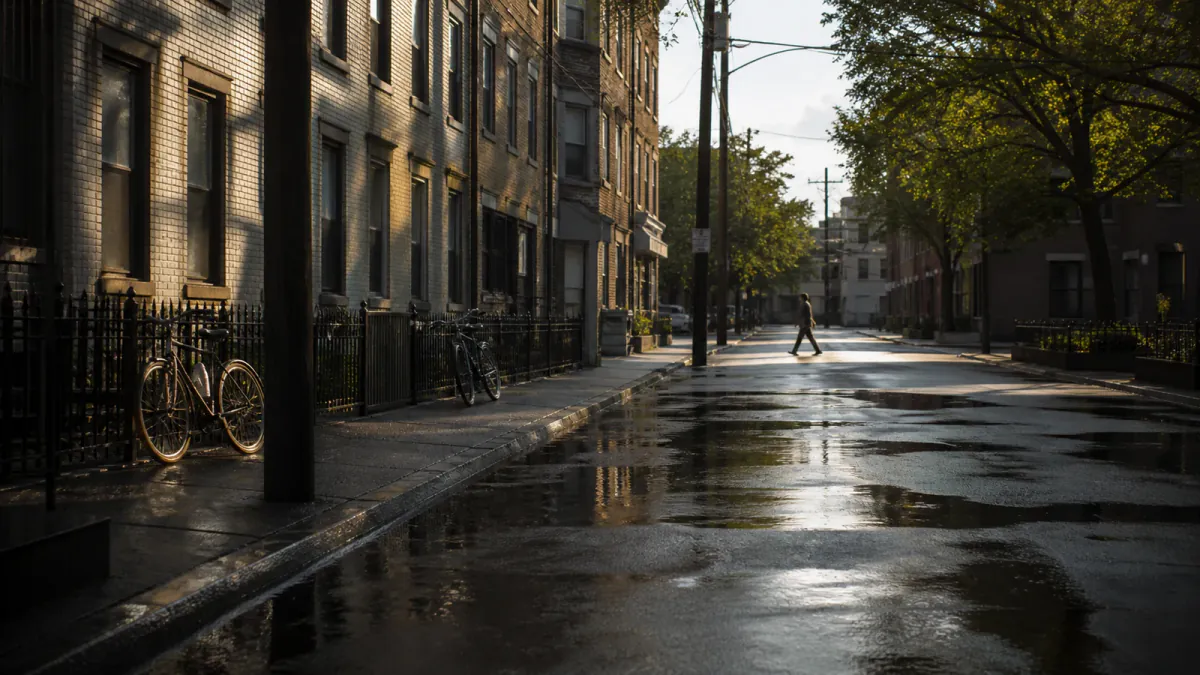
A line of windows, a reflection beneath a bridge, or a figure crossing a bright pavement can make an ordinary street worth a second look. Recognizing the arrangement gives the photographer a starting point. Timing, camera position, and the frame’s edges determine what happens next.
That is the practical appeal of Pat Kay’s lesson, How Japan trained my photographic eye . In Alex Cooke’s account for Fstoppers , Kay describes attention as a limited budget. Familiar visual relationships take less effort to recognize, leaving more attention for decisions within the scene.
Cooke’s example is a cherry-blossom park in Yamaguchi. Kay recognizes relationships among people, branches, and reflections even though the location is new to him. The useful idea is familiarity with a visual structure, rather than familiarity with a particular place.
A local route offers a straightforward way to develop that fluency. The following four-week exercise combines repeated walks, paired picture reviews, and a second pass devoted to less familiar compositions.
Give Each Walk a Clear Starting Point
Choose a short route you can walk twice a week for four weeks. Keep each session to an hour or less. Use one camera and a familiar lens or phone view, so the setup leaves you free to watch the scene.
Begin at roughly the same time of day. Repeated light makes it easier to compare what changes between visits: the position of a shadow, the density of pedestrians, the color of parked cars, or the reflections left by rain.
Choose an exposure approach that suits the action. The Newsroom’s guide to camera modes for motion, depth, and light explains how to keep the defining quality of the photograph under control. Once the settings support your intention, return your attention to the street.
Walk at a pace that lets you stop without blocking others. Let people continue their activities, give them room, and move on when photographing would intrude. Observation works best when you remain attentive to the place and the people sharing it.
Look for Frames, Repetitions, and Interruptions
Use three simple prompts to organize your looking:
- Frames: a doorway, a gap between branches, or a shadow surrounding another subject.
- Repetitions: windows, bicycles, colors, or gestures that establish a visual rhythm.
- Interruptions: a single element that changes that rhythm, such as an open window among closed ones.
These are relationships within a composition . Their strength depends on how the elements fit together. A doorway may provide a clear border, but its subject still needs enough space to read. A repeated color may connect two parts of a scene, while an unrelated bright object pulls attention elsewhere.
When an arrangement interests you, make a small sequence. Change one thing at a time. Shift sideways to alter an overlap, lower the camera to change the background, or wait for a gap between figures. Compare the result with the first frame while the reason for the change is still fresh.
A window grid might become stronger when one person occupies a single opening. A reflection might become clearer when a passing object leaves the surface. Look for the decision that gives the pattern a subject.
Read the Near Miss Alongside the Successful Frame
After each walk, select one photograph that holds together and one that came close. Place them side by side at the same viewing size. Begin with the full frame, then look more closely at the area where the composition succeeds or breaks down.
Describe each in a short, concrete sentence. “The pale coat separates from the dark doorway” is more useful than “good contrast.” “The hand overlaps the sign” identifies a problem you can recognize on the next walk.
Then name the choice that would most change the near miss. It might be a different camera height, an earlier exposure, a clearer background, or a little more space around the subject. Distinguish what you could control from what happened too quickly to adjust.
Keep the notes brief enough to revisit before the next session. Their purpose is to connect a visible result with a practical decision. Over time, those specific observations become a more useful guide than a collection of favorite compositional rules.
Make a Second Pass With a Different Question
On the return leg of the walk, set aside the arrangement you used most often. If the first pass was full of isolated figures in doorways, look for a relationship involving several people. If repeated architecture dominated, attend to a gesture, a quiet surface, or an unexpected color.
Change your distance as well as your subject. A familiar corner may offer a small still life close by, a layered scene across the road, and a graphic arrangement from farther away. Each distance asks you to organize different information.
This second pass keeps the exercise exploratory. You are adding possibilities to your visual vocabulary, then choosing the one that suits the scene in front of you. Familiarity becomes useful when it makes that choice more attentive.
Read the Four Weeks as a Sequence
After eight walks, lay out the eight selected photographs and eight near misses. Group them by visual relationship, then by the decisions recorded in your notes. Look for a recurring improvement, such as cleaner separation, more deliberate edges, or better timing within a busy scene.
Also look for subjects you repeatedly overlooked. Perhaps every selected frame relies on architecture, while the near misses contain more interesting gestures. That is a useful direction for the next month.
Choose one relationship to keep practicing and one to explore. Return to the same route with those two intentions. The street supplies changing light and activity, while the growing sequence shows how your attention is changing with it.
Worked example: a row of windows needs an interruption
Picture five similar windows above a sidewalk. In one proposed frame, a pedestrian sits beneath the third window but overlaps a dark pole. In another, the same person has moved into the gap between the pole and a doorway. The architecture supplies the same rhythm, while the second frame gives the figure clearer separation.
Write one observation for each: pattern present but subject merges with pole, then subject separates while rhythm remains. Avoid rating the pair merely as weak and strong. A third frame without the pedestrian tests whether the architectural pattern can carry the picture on its own.
On the next walk, keep the viewpoint and wait for a different interruption, such as two people with matching gestures. This compares timing with framing without requiring a new destination. Our street-photography waiting exercise develops that distinction. After four weeks, review whether your notes describe increasingly specific overlaps and moments rather than simply more photographs.