A Blanket Message About a Varied Practice
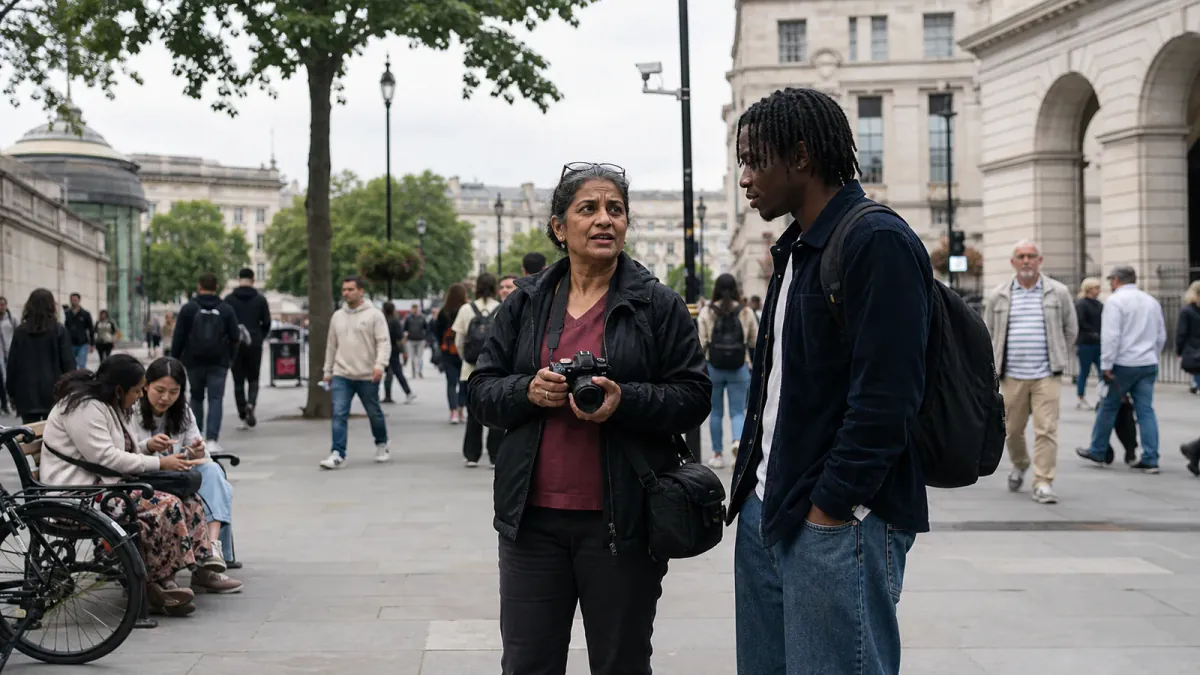
A candid glance, a crowd crossing a square, and a news photograph of a public event can all place recognizable people in the frame. The dispute over the Home Office's photography poster concerns whether those ordinary acts require everyone's permission, and how clearly government information distinguishes them from harmful or unlawful recording.
Published on August 19, the official poster page presents permission as a general condition for photographing or filming someone in the UK. The material comes from UK Visas and Immigration and is addressed to people seeking asylum. Its public-space message has drawn objections from both the Royal Photographic Society and the National Union of Journalists.
The issue is the breadth of that message. A rule about all photographs of people carries a different meaning from a warning about harassment, intrusive recording, or misuse of an image. For photographers, those distinctions shape the relationship between making a picture, approaching its subject, and deciding how it will be seen.
What the RPS and NUJ Say
In its August 26 response , the Royal Photographic Society says the general legal position has not changed: UK public photography does not carry a universal requirement to obtain a subject's permission. It supports a review of the Home Office material and places that freedom alongside responsibilities toward the people photographed.
The NUJ's August 25 statement calls for a correction. The union says the poster misrepresents the law by suggesting that taking pictures of people without consent in streets or parks could lead to arrest. It distinguishes ordinary public photography from specific conduct such as voyeurism, upskirting, harassment, and intrusion where someone reasonably expects privacy.
The union also describes a working environment in which visual journalists already encounter obstruction and hostility. Its concern is that inaccurate official information could intensify confrontation and discourage public-interest reporting. Those consequences matter to the person holding the camera and to the audience relying on the resulting photographs.
How the Police Code Treats Photography
The Home Office's counterterrorism stop-and-search code for England, Wales, and Scotland approaches photography through conduct and context. Section 4.13 says the public and media need no permit to photograph or film in public places. Photographing public buildings is not itself an offense, and police cannot stop people recording police incidents or personnel simply because they are recording them.
The code also cautions against treating photography as inherently suspicious. Activity suggesting hostile reconnaissance can, in rare circumstances, contribute to grounds for a counterterrorism search. Camera use alone does not establish that suspicion.
A permit from an authority and consent from a person in the frame are different questions. The code addresses policing powers, while the RPS statement addresses the general consent requirement directly. Together, they show why a single prohibition is an inadequate account of public photography.
Making a Picture and Publishing It
A photograph has more than one consequential moment. There is the encounter with the subject, the exposure, the edit, and the eventual presentation. Each stage can change what the picture communicates.
The RPS highlights privacy, the treatment of children and vulnerable people, and the subsequent use of identifiable faces, particularly where an image suggests endorsement or commercial exploitation. Its distinction between legal permission and responsible practice belongs throughout that sequence.
Consider the difference between a wide frame describing a busy street and a tight crop isolating one distressed passerby. The exposure might come from the same encounter, yet the editorial emphasis changes. A caption can supply essential context or encourage an unsupported inference. Placement beside a headline can turn a background figure into the apparent subject of a claim.
These are photographic decisions, not administrative details. Framing determines what viewers notice. Selection determines which moment stands for the encounter. Publication determines who sees it and in what context. Assessing those choices is part of understanding the image itself.
Why Candid Observation Matters
Street photography often depends on relationships that exist for a fraction of a second: a gesture answering a sign, two figures briefly aligned, or the rhythm of pedestrians moving through light. Asking someone to repeat the moment produces another kind of picture. A collaborative street portrait can be equally worthwhile, but it has a different relationship to the event.
Photojournalism adds the responsibility to describe events for an audience. The significance of a demonstration, public celebration, or civic encounter may lie in the interaction among many people rather than in one consenting participant.
Neither practice benefits from confusing an ethical conversation with a universal permission requirement. Clear guidance can recognize spontaneous observation while explaining the circumstances in which conduct or image use causes harm. It can also make room for courtesy without presenting every request as a statement of law.
Clarity Serves Photographers and Subjects
The government publication page identifies an accessibility review. It does not announce replacement wording addressing the RPS and NUJ objections. That leaves the central disagreement unresolved.
The strongest public guidance would distinguish ordinary photography from specific prohibited behavior, then explain how privacy and responsible image use affect particular situations. People seeking asylum deserve accurate information about their rights and obligations. Photographers and their subjects deserve the same clarity.
A camera records more than an individual's likeness. It can describe the character of a place, the conduct of institutions, or a shared public moment. Guidance that recognizes those purposes can protect people without mischaracterizing the act of photographing them.