A History Built From Distinct Ways of Seeing
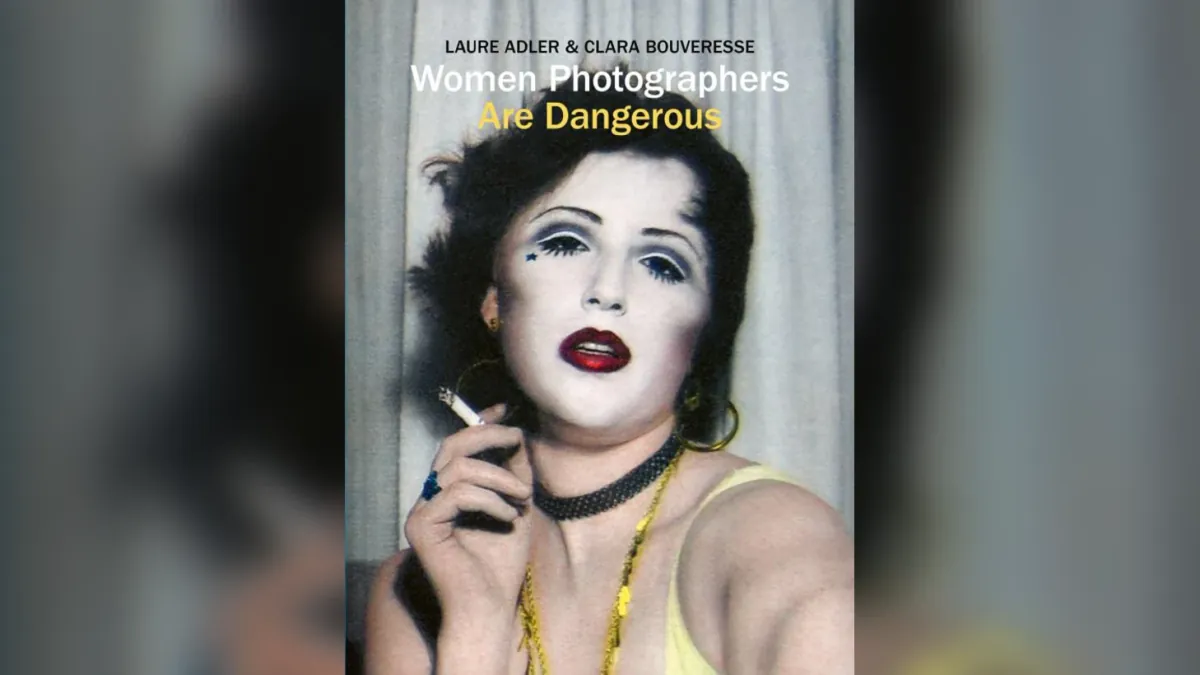
Women Photographers Are Dangerous places scientific observation, portraiture, documentary work, and visual activism within the same broad photographic history. Written by Laure Adler and Clara Bouveresse, the ACC Art Books volume gathers more than 100 photographs by over 60 photographers, from the nineteenth century to the present.
The publisher's selection includes Anna Atkins, Julia Margaret Cameron, Dorothea Lange, Lee Miller, Eve Arnold, Graciela Iturbide, Susan Meiselas, Zanele Muholi, and Laia Abril. Their inclusion establishes a wide field of activity rather than a single school or style. The connecting subject is authorship: who makes an image, what knowledge it carries, and how it enters public life.
Adler's work as a writer and historian centers on women and feminism. Bouveresse is a photography historian. Their subject brings questions of recognition into contact with the photographs themselves, where differences of process, purpose, and audience become especially revealing.
Anna Atkins: Observation Becomes a Photographic Book
Atkins offers an early example of photography functioning as both a means of study and a form of publication. The Metropolitan Museum of Art's record of Photographs of British Algae dates the work to 1843–53 and describes its publication in installments beginning in 1843.
To make the plates, Atkins placed algae on sensitized paper and exposed it to sunlight. The resulting cyanotypes joined a specimen's shape to its identifying name. The Met notes that she drew material from her own collecting and exchanges with other amateur scientists, and labeled the plates by hand.
That method gives photographic authorship a particularly tangible form. Selection, arrangement, exposure, and labeling all contribute to the page. The photograph is an organized way of sharing knowledge, with composition serving the practical task of making a specimen legible.
This is a useful starting point for a history that crosses genres. Photography's contributions include the patient description of an object as well as the recording of an event or the construction of a portrait.
Eve Arnold: The Person Within the Public Image
Arnold's practice brings another relationship into view: the collaboration between photographer and subject. Her estate's account of the Marilyn Monroe photographs emphasizes work, preparation, and thought alongside the star's public image.
The estate describes Monroe choosing Arnold after seeing her photographs of Marlene Dietrich. Their collaboration developed through an understanding that a performer could be pictured as a working person, with intelligence and agency, as well as a familiar face.
For portrait photographers, that distinction changes the assignment. A recognizable subject can supply immediate visual interest, but the picture's meaning emerges from attention to gesture, concentration, and the interval around a performance. Preparation can reveal as much as presentation.
Arnold's example also shifts the language of access. Proximity becomes photographically valuable through the relationship it enables. Time with a subject creates opportunities to notice a rhythm, allow a pause, and recognize a moment that belongs to the person rather than to an expected public role.
Zanele Muholi: Portraiture as a Living Archive
Muholi's work extends the question of visibility into collective memory. In their artist's statement for Faces and Phases , published by Stevenson, Muholi describes making portraits to establish and preserve Black queer visibility. The project records people whose lives and contributions have been insufficiently represented in mainstream histories.
The statement locates the photographs within relationships, remembrance, and community. Muholi describes encounters with participants across South Africa and beyond, and the importance of creating a record for future generations.
Portraiture here is sustained work rather than an isolated encounter. Individual faces acquire another dimension through a series, while names and circumstances keep the archive connected to the people it represents. The photographic sequence becomes a means of holding both individuality and shared history.
Set alongside Atkins and Arnold, this practice demonstrates how differently a photograph can operate. It can identify a specimen, complicate a public persona, or preserve a community's presence. The comparison makes the breadth of the publisher's selection concrete.
Following the Connections Beyond the Survey
A 160-page volume offers a compact introduction to that range. ACC lists 35 color and 75 black-and-white illustrations, a hardback format, and ISBN 9781788843713. Its US and UK listings both give September 15, 2026 as the publication date. PetaPixel's August 30 announcement reported September 5.
The survey format creates routes into larger bodies of work. A photographer's name can lead to a museum collection, an estate archive, an exhibition, or a dedicated monograph. Each changes the scale of attention, from one reproduced image to the development of a practice.
Our coverage of Lee Miller: Fearless follows one such route across fashion, Surrealism, portraiture, and wartime reporting. A career understood across several fields looks different from a career represented by one familiar photograph.
For readers making photographs themselves, the productive comparison is often a precise one. How does a picture establish knowledge? What relationship made it possible? Where did it circulate? Those questions connect historical work to present decisions about subjects, captions, editing, and publication.
The breadth of Women Photographers Are Dangerous brings many answers into view. Its subject is not only recognition for individual careers, but a photographic history enlarged by the different purposes those careers have served.