A small object, a visible pattern
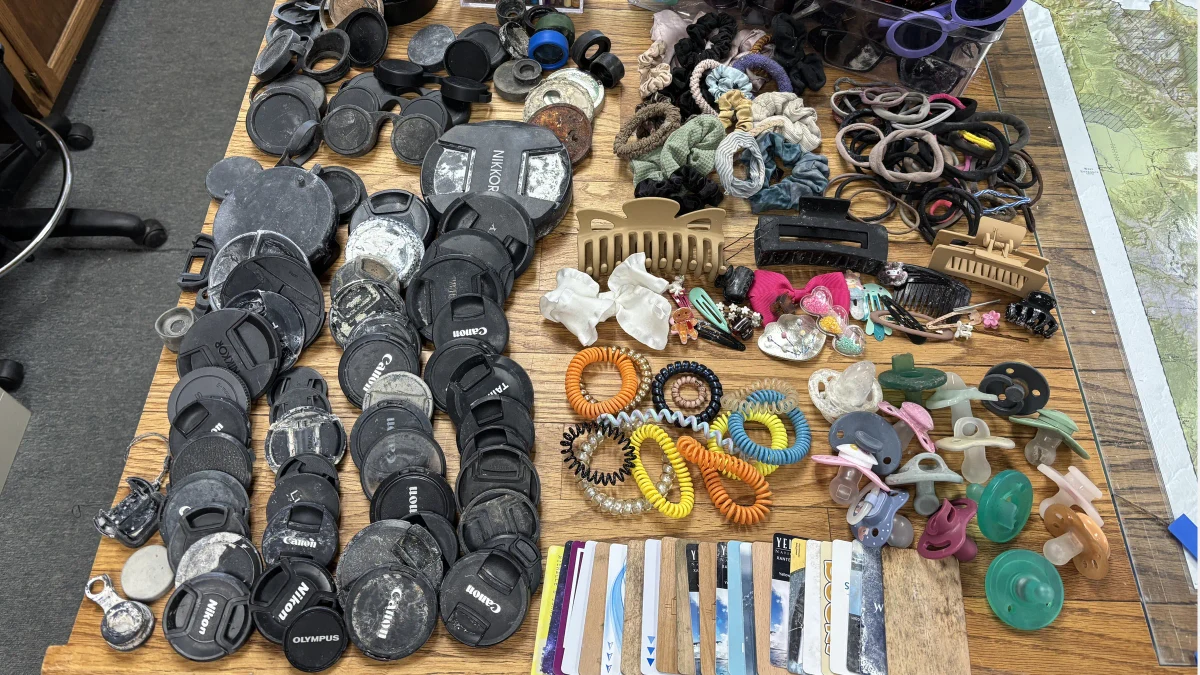
Fifty-four camera lens caps were among the objects removed from Yellowstone’s hydrothermal areas by early September 2026. Set beside hair ties, sunglasses, and hotel key cards in the park’s recovery photograph, they turn a familiar piece of camera equipment into a clear lesson in field practice.
The figures come from a September 14 Yellowstone Volcano Observatory report by Margery Price, a physical science technician with the National Park Service. By that point in the season, the geology team had collected more than 20,100 pieces of trash, 5,600 rocks and sticks, and over 280 hats from hydrothermal areas.
The lens caps sit within that larger workload. Other listed finds included 47 hair ties, 42 pencils, 36 pairs of sunglasses, 20 hotel key cards, and 17 pacifiers. For photographers, the cap count is especially recognizable: a small object removed almost automatically when a promising view appears.
What the recovery photograph reveals
Price’s National Park Service photograph groups the objects across a tabletop. Dark circles and overlapping brand names occupy much of the left side. Hair accessories, colored coils, pacifiers, and rows of cards create a different rhythm on the right. The arrangement makes the scale of repeated losses immediately legible.
The caps are ordinary, varied, and visibly used. Their familiarity brings the story close to anyone who has searched a camera bag for a missing cover. In this setting, however, a misplaced accessory becomes part of a collection assembled through specialist staff work.
The picture also broadens the lesson beyond cameras. Every small item that moves between a hand, pocket, and bag has a moment when it can fall or blow away. A photographer looking through the viewfinder may be concentrating on steam, color, or a changing group of visitors while that transition happens almost unnoticed.
Good equipment handling protects that attention. A reliable place for each loose part lets the photographer return to the scene without leaving an object behind.
Why the ground changes the stakes
Yellowstone National Park is a landscape whose hydrothermal features draw visitors into close viewing spaces. Boardwalks make those encounters possible while protecting both people and delicate formations.
Foreign material can interfere with a feature’s water supply, divert runoff, or introduce chemicals and sediment, the observatory explains. The geology team’s recovery work sits alongside temperature and chemical monitoring, incident assessment, and public education.
The National Park Service’s account of Morning Glory Pool describes debris lodged around the spring’s sides and vent. Reduced circulation lowered the water temperature and helped change the organisms and colors visible there. The agency also notes that natural changes may contribute to cooling. The pool’s history shows why keeping foreign objects out of these systems matters.
Accidental loss and deliberate littering have different causes, but both leave material that staff must assess. Prevention begins before the cap leaves the lens.
Give every loose part a destination
Choose a secure pocket or bag compartment for the lens cap and use it consistently. Open that destination before removing the cap, put the cap away, and close the pocket or compartment before raising the camera.
Avoid balancing accessories on a rail, an open bag, or the edge of a viewing platform. Wind and passing movement can turn a temporary resting place into a lost object. The observatory specifically identifies gusts as a reason items accumulate in the thermal areas.
Apply the same routine to filter cases, cleaning cloths, battery covers, and memory-card holders. A small pouch can keep several pieces together inside the bag. If you use a cap tether, check that it is secure and that the loose section will not catch on a rail or interfere with the camera.
Prepare changes where there is room to work safely. Decide which lens and filter are likely to suit the viewpoint, secure the remaining equipment, and keep the route clear. A simpler setup leaves more attention for the photograph and for the people around you.
Leave recovery to park staff
The park’s thermal-basin safety guidance is direct: remain on boardwalks and designated trails. Thin, breakable crust can cover scalding water, and contact with hot springs can cause severe or fatal burns.
If an object falls beyond the permitted route, leave it in place and tell park staff where it landed. Do not step off the boardwalk or lean beyond a barrier to retrieve it. A valuable filter or phone does not make the ground safe.
Describe the location from the path, using a nearby feature or viewpoint to help staff identify it. The geology team is trained for hydrothermal navigation. Recovery belongs with people who can assess the conditions and the feature itself.
Keep children close and small belongings secured as well. A shared visit brings more hands, pockets, and distractions into the scene, so a simple routine is useful for the whole group.
Make the departure part of the photograph
Before leaving a viewpoint, check the small items as well as the camera. Close the bag, account for caps and cases, and inspect the permitted space where you worked. This brief check completes the setup rather than becoming a separate chore later.
Our street-photography exercise in deliberate observation asks photographers to notice relationships beyond the first obvious subject. At Yellowstone, that attention includes the wind, the boardwalk, the surrounding visitors, and the equipment in hand.
The 54 recovered caps make the connection tangible. Care for a landscape can begin with a routine so small that it fits between uncovering the lens and making the first frame.